Have you ever wished you could escape the noise around you and enjoy pure, uninterrupted sound? Noise canceling headphones promise just that – a personal bubble of silence even in the busiest places.
But how exactly do they work to block out all that background noise? Understanding this can change the way you listen to music, work, or relax. Keep reading, and you’ll discover the clever science behind these headphones and why they might be the perfect addition to your daily routine.
Credit: www.plant-tours.com
Basics Of Noise Canceling
Noise canceling helps reduce unwanted sounds around you. It makes listening to music or calls clearer and more enjoyable. Headphones use special technology to block outside noise. This allows you to focus on what you want to hear.
Understanding how noise canceling works starts with knowing the types of noise. Different noises need different ways to block them. The technology in headphones either blocks noise physically or uses sound waves to cancel noise.
Types Of Noise
Noise comes in two main types: constant and sudden. Constant noise includes sounds like airplane engines or fans. Sudden noise includes things like car horns or people talking loudly. Constant noise is easier to block with noise canceling technology. Sudden noise is harder to cancel because it changes quickly.
Active Vs Passive Noise Canceling
Passive noise canceling blocks sound by using materials that cover your ears. Thick padding and tight seals stop some noise from entering. Active noise canceling uses tiny microphones to listen to outside noise. It then creates opposite sound waves to cancel that noise. This method works best for constant noises.
Many headphones combine both passive and active noise canceling. This combination offers better noise reduction for different environments. It helps create a quiet space for your ears.

Credit: www.sciencefocus.com
Components Inside Noise Canceling Headphones
Noise canceling headphones have special parts inside that help block outside sounds. These parts work together to create quietness around your ears. Understanding these parts shows how the headphones reduce noise so well.
Microphones
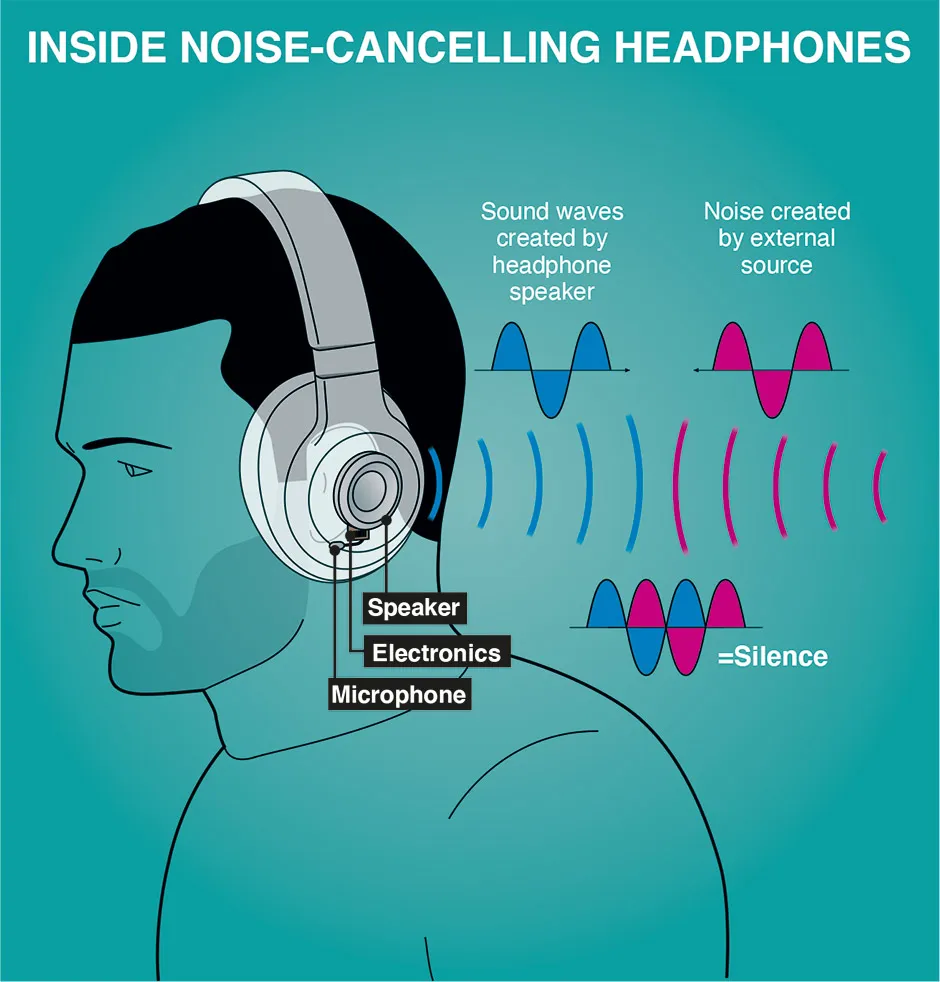
Small microphones sit inside and outside the ear cups. They listen to the sounds around you. The outside microphones catch the noise from the environment. The inside ones hear sounds that leak in near your ears. These microphones send sound signals to the headphone’s processor.
Noise Canceling Circuitry
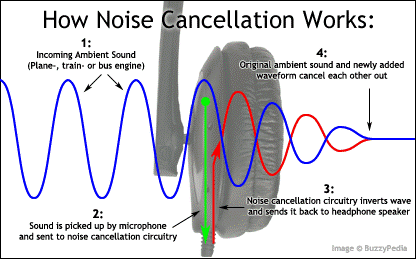
This is the brain of the headphones. It takes the microphone signals and creates opposite sound waves. These waves cancel out the unwanted noise by mixing with it. This process is called “anti-noise.” The circuitry must be fast and accurate to work well.
Speakers
The speakers play music or sounds you want to hear. They also play the anti-noise signals from the circuitry. This mixes with the outside noise, making it much quieter. Good speakers produce clear sound without distortion for the best experience.
How Active Noise Cancelation Works
Active noise cancelation (ANC) is the technology behind noise canceling headphones. It helps reduce unwanted sounds around you. The headphones listen to the noise, then create sound waves to cancel it out. This section explains how ANC works step-by-step.
Sound Wave Interference
Sound travels in waves. Noise canceling headphones use a special trick called sound wave interference. They create a new sound wave that is the exact opposite of the noise wave. When these two waves meet, they cancel each other out. This makes the noise much quieter or gone.
Real-time Noise Detection
Microphones inside the headphones listen to sounds around you. They catch the noise quickly and send signals to the headphone’s processor. The processor works fast to understand the sound wave’s shape and size. This real-time detection is key for effective noise cancelation.
Anti-noise Signal Generation
After detecting the noise, the headphones create an anti-noise signal. This signal has the opposite wave form of the noise. The headphones play this anti-noise through the speakers. It mixes with the outside noise to reduce or erase the unwanted sound. This process happens continuously for clear listening.
Credit: www.sciencefocus.com
Role Of Passive Noise Isolation
Passive noise isolation plays a key role in noise canceling headphones. It blocks outside sounds using physical barriers. This helps users enjoy clear music and calls without distractions.
Passive noise isolation works by sealing the ears from external noise. It reduces background sounds before active noise cancellation starts working. This makes headphones more effective in noisy places.
Ear Cup Design
Ear cups cover the ears completely or partially. Over-ear cups surround the ear, creating a tight seal. This seal helps stop sound from entering.
On-ear cups sit on the ears but still block some noise. The shape and size of ear cups affect how well they isolate sound. Larger, well-padded cups offer better noise blocking.
Materials And Fit
Soft foam padding inside ear cups cushions the ears. It also blocks gaps where noise can enter. Materials like memory foam adapt to the ear shape for better fit.
A good fit is essential for passive noise isolation. Loose fitting headphones allow sound to leak in. Adjustable headbands help users find a snug fit for better isolation.
Benefits Of Noise Canceling Headphones
Noise canceling headphones offer several key benefits. They improve how you hear sounds around you. They also protect your ears from loud noises. Plus, they help you stay focused in noisy places. These advantages make noise canceling headphones a smart choice for many users.
Improved Listening Experience
Noise canceling headphones block out background noise. This lets you hear music or voices clearly. You do not need to raise the volume high. The sound feels richer and cleaner. This creates a better and more enjoyable listening time.
Hearing Protection
By reducing outside noise, these headphones protect your ears. You avoid turning the volume too loud. Loud sounds can harm your hearing over time. Using noise canceling headphones helps keep your ears safe. This is important for long-term ear health.
Enhanced Focus
Noise canceling headphones help you concentrate better. They reduce distractions from busy environments. Whether at work or study, you can stay on task. This improves productivity and lowers stress. Quiet surroundings make it easier to think clearly.
Limitations And Challenges
Noise canceling headphones offer great benefits but come with some limits and challenges. Understanding these helps users set the right expectations. These challenges affect how well the headphones work in different places, how long they last, and how the sound feels.
Effectiveness In Different Environments
Noise canceling works best with steady sounds like airplane engines or air conditioners. Sudden noises like people talking or dogs barking are harder to block. Outdoors, wind noise can reduce effectiveness. Quiet places need less noise canceling power. Crowded places with many sounds can confuse the headphones.
Battery Life And Power Consumption
Active noise canceling needs power to work. Batteries run out after several hours. Using noise canceling drains battery faster than normal listening. Headphones need to be charged regularly to keep working well. Some models have longer battery life but cost more. Without power, noise canceling stops working.
Sound Quality Impact
Noise canceling can change how music sounds. Some headphones reduce bass or clarity slightly. The technology may add a slight hiss or background sound. Users may notice a difference when noise canceling is on. Sound quality depends on headphone design and brand. Balancing noise canceling and sound quality is a challenge.
Choosing The Right Noise Canceling Headphones
Choosing the right noise canceling headphones can improve your listening experience greatly. These headphones reduce unwanted sounds, letting you focus on music or calls. Picking the best pair depends on your needs and budget. Understanding key features helps make a smart choice. Knowing popular brands guides you to trusted products.
Key Features To Consider
Comfort matters for long use. Look for soft ear cushions and adjustable headbands. Battery life is important for wireless models. Longer battery means more listening time. Sound quality varies; check for clear bass and treble. Noise canceling strength differs among models. Some block more noise than others. Wireless or wired? Wireless gives freedom, wired never runs out of power. Extra features like a built-in mic help with calls. Also, easy controls make daily use simple.
Popular Models And Brands
Many brands offer quality noise canceling headphones. Bose is known for excellent noise reduction and comfort. Sony delivers great sound and smart features. Apple’s AirPods Pro blend noise canceling with seamless device use. Sennheiser provides clear sound with balanced noise canceling. JBL offers budget-friendly options with good performance. Each brand has models for different needs and prices. Reading reviews helps find the best fit for you.
Future Of Noise Canceling Technology
The future of noise canceling technology looks very promising. It is moving beyond just blocking sound. New innovations will make headphones smarter and more useful in daily life.
Noise canceling will not only reduce noise but also adapt to the environment. This means better sound quality and comfort. Users will enjoy more natural and clear audio in busy places.
Advancements In Ai And Machine Learning
Artificial intelligence helps headphones learn from sound patterns. They recognize different noises and adjust canceling levels automatically. This makes the experience smoother and more effective.
Machine learning allows headphones to improve over time. They get better at blocking noise and enhancing voices. This leads to clearer calls and better music quality.
Integration With Other Devices
Future noise canceling headphones will connect easily with many devices. They will sync with smartphones, smart watches, and even home assistants. This creates a seamless user experience.
Users will control noise canceling and sound settings through other devices. This makes it simple to switch modes or adjust volume. The headphones become part of a larger smart system.
Frequently Asked Questions
How Do Noise Canceling Headphones Block Sound?
Noise canceling headphones use microphones to detect external noise. They create sound waves that cancel out these noises, reducing unwanted sounds and providing clearer audio.
What Is The Difference Between Active And Passive Noise Canceling?
Passive noise canceling blocks sound using physical barriers like ear pads. Active noise canceling uses electronics to cancel noise by producing opposite sound waves.
Can Noise Canceling Headphones Improve Sound Quality?
Yes, by reducing background noise, these headphones allow you to hear music or calls more clearly and with better detail.
Do Noise Canceling Headphones Work In All Environments?
They work best in steady, low-frequency noises like airplane engines. Sudden or high-frequency sounds may not be fully canceled.
Conclusion
Noise canceling headphones block unwanted sounds effectively. They use microphones to catch noise around you. Then, they create sound waves that cancel those noises out. This helps you focus on music or calls clearly. These headphones work best in noisy places like planes or buses.
Battery power is needed for active noise canceling to work. Understanding how they function helps you choose the right pair. Quiet moments become easier to find with this technology. Enjoying sound without distractions is now possible for everyone.
As an Amazon Associate, I earn from qualifying purchases.