Have you ever stopped to wonder when the first smartphone was invented? It’s easy to take your phone for granted, but the story behind this powerful device is full of surprises.
Knowing how and when smartphones came to be can change the way you see your own device. You’ll discover the fascinating moment that sparked a technological revolution and learn how it shaped the world you live in today. Keep reading—you might be amazed at what you find out.
Credit: techwireasia.com
Early Mobile Communication Devices
Before smartphones, people used many devices to talk without wires. These early tools helped shape how we connect today. They moved from simple radios to more complex mobile phones. Each step made communication easier and faster.
Understanding these devices helps us see how the first smartphone was born. The journey shows human effort to stay in touch anytime, anywhere. It also reveals how technology grew in small, important steps.
From Radios To Mobile Phones
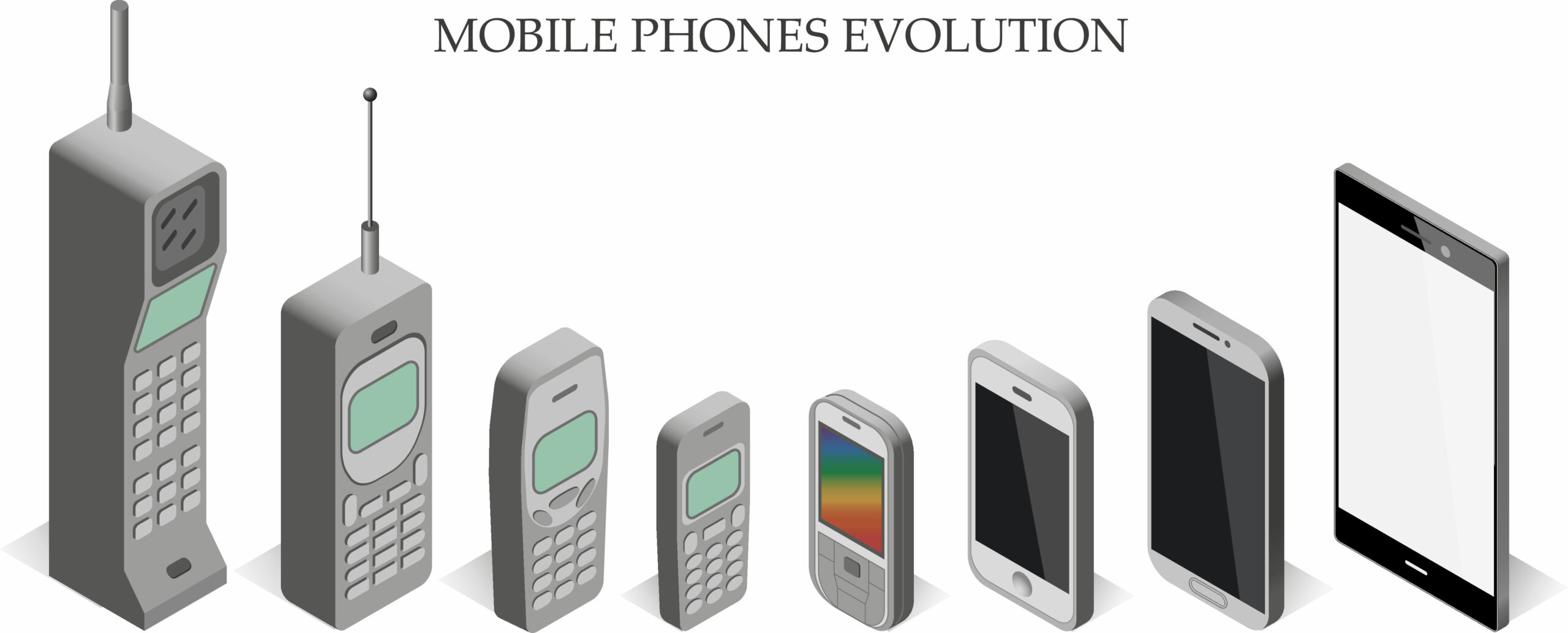
Radios were among the first tools for wireless communication. People used them to send messages across distances without cables. Later, engineers created mobile phones that could connect calls on the move. These phones were big and heavy but a big step forward.
Early mobile phones had limited coverage and short battery life. Still, they showed that talking without wires was possible. This idea sparked more inventions that led to smaller and smarter devices.
Pioneers In Mobile Technology
Several inventors worked hard to improve mobile communication. Martin Cooper is famous for making the first practical mobile phone call in 1973. His work inspired many others to develop better technology.
Companies like Motorola and Bell Labs played key roles in this progress. They built networks and improved phone design. These pioneers laid the foundation for the smartphone era.

Credit: www.cellularsales.com
The Birth Of The First Smartphone
The first smartphone changed how people use phones forever. It combined a phone and a small computer. This device started a new era in communication and technology. People could now do more than just call or text.
The idea of a phone that could do many tasks was bold. It took years of work to create the first real smartphone. The device paved the way for all modern smartphones we use today.
Ibm Simon: The Groundbreaking Device
IBM Simon was the first smartphone ever made. It launched in 1994. This device looked like a large mobile phone with a touchscreen. People could make calls, send faxes, and emails on it.
Simon was not just a phone. It had a calendar, address book, and note pad. It was a new way to stay connected and organized. This device proved that phones could do much more.
Key Features That Defined Early Smartphones
The first smartphone had features that were new at the time. A touchscreen replaced many buttons. This made it easier to use and more flexible.
It combined calling and computing functions in one device. People could write messages, manage contacts, and even send faxes. These features were rare and exciting in the early 90s.
Battery life was short, and the device was large. Still, it showed the potential for future smartphones. Its design set the foundation for later devices.
Technological Innovations Behind The First Smartphone
The first smartphone combined several new technologies into one device. These innovations made it possible to do much more than just call or text. It changed how people use phones every day.
Each part of the phone worked together to create a powerful tool. Understanding these technologies helps us see why the first smartphone was so special.
Touchscreen Technology
The first smartphone used a touchscreen to replace physical buttons. This allowed users to interact directly with the screen. Early touchscreens were simple but effective. They made the device easier to use and more flexible. Users could tap, swipe, and scroll through menus and apps.
Integrated Applications And Software
The phone came with built-in apps for email, calendar, and notes. It used software that managed these apps smoothly. This software made multitasking possible, letting users switch between tasks fast. It was one of the first phones to run programs like a small computer.
Connectivity Capabilities
The smartphone supported cellular networks for voice and data. It could connect to the internet, which was new for phones at that time. This allowed users to browse websites and send emails on the go. Bluetooth and infrared helped connect with other devices too.
Impact Of The First Smartphone On Tech Industry
The first smartphone changed the technology world deeply. It combined phone calls with computing power. This new device pushed the tech industry to think differently about mobile devices. Companies started to focus on more than just calling features. They aimed to create small computers for users’ pockets.
The smartphone brought new ideas and challenges. It made people expect more from their phones. Tech firms had to innovate fast to meet these new demands. The impact on the tech industry was big and lasting.
Shifts In Mobile Communication
The first smartphone changed how people communicate on the go. Text messages and emails became easy to send and receive. People no longer relied only on voice calls. They began to use their phones for many tasks at once. Mobile communication became faster and more flexible.
This shift pushed phone makers to add better screens and keyboards. Messaging apps and internet browsing grew in importance. The smartphone turned into a tool for both work and fun.
Influence On Future Smartphone Designs
Early smartphone designs set the path for future models. Touchscreens, apps, and internet access became standard features. Designers focused on making devices slimmer and lighter. Battery life and speed were also key areas for improvement.
Tech companies learned to build phones that do more than call. Cameras, GPS, and music players were added next. The first smartphone’s design inspired endless innovation in the industry.
Evolution After The First Smartphone
The first smartphone marked a new era in mobile technology. Since then, smartphones have changed a lot. They grew from simple devices to powerful tools that help in daily life. Each step brought new features and better designs. People began to rely on smartphones for many tasks beyond calling and texting.
The evolution after the first smartphone shows how fast technology moves. New models appeared each year with improved screens, cameras, and internet access. This growth made smartphones essential for work, learning, and entertainment.
Major Milestones In Smartphone Development
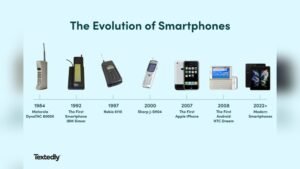
The early 2000s saw the first smartphones with touchscreens and internet access. In 2007, a big change happened with the launch of a phone that had a large touch display and no physical keyboard. This device made using apps easy and popular.
Later models added faster processors and better cameras. Wireless charging and facial recognition became common. Phones also grew slimmer and lighter. Each milestone made smartphones more useful and enjoyable.
Rise Of Operating Systems And App Ecosystems
Smartphone operating systems became important to manage all features. Early phones used simple software. Then systems like Android and iOS arrived, offering rich user experiences. These systems allowed developers to create many apps.
App stores opened new ways for users to customize phones. Apps for games, shopping, health, and education became widely available. The app ecosystem made smartphones versatile and personal for everyone.
Legacy Of The First Smartphone
The first smartphone left a strong mark on technology and society. It changed how people communicate and use devices daily.
This early invention paved the way for the phones we use now. Its legacy is seen in many parts of life and tech.
Cultural And Social Changes
The first smartphone changed how people connect. Calls and texts became easier and faster.
It made information available anytime and anywhere. This helped people stay informed and in touch.
Social habits shifted as more people used phones for social media and messaging. It brought people closer across distances.
Work and play blended. People could check emails or play games on the go.
Lessons For Modern Mobile Innovation
The first smartphone taught valuable lessons to makers today. User-friendly design is important.
Battery life and speed became key priorities. People want phones that last and work fast.
Developers learned to focus on apps and software that add value. Phones are not just for calls anymore.
Security and privacy also became crucial areas to improve. Users expect their data to be safe.
-min.jpeg)
Credit: www.textedly.com
Frequently Asked Questions
When Was The First Smartphone Invented?
The first smartphone was invented in 1992 by IBM and released in 1994 as the Simon Personal Communicator. It combined a phone and PDA, featuring a touchscreen and apps. This device marked the beginning of modern smartphones.
Who Invented The First Smartphone?
IBM invented the first smartphone, called Simon Personal Communicator. It was developed by Frank J. Canova and launched in 1994. This innovation paved the way for future mobile communication technology.
How Did The First Smartphone Differ From Today’s Phones?
The first smartphone had a touchscreen, email, and fax capabilities but lacked modern apps and fast internet. It was bulky and had a short battery life compared to today’s sleek, powerful smartphones.
Why Is The Ibm Simon Considered The First Smartphone?
IBM Simon combined calling, PDA features, touchscreen, and apps in one device. It introduced concepts like email, calendar, and fax in 1994, making it the first true smartphone.
Conclusion
The first smartphone changed how people use phones today. It combined calling, texting, and computing in one device. This invention paved the way for modern mobile technology. Smartphones now help with work, learning, and fun. They keep us connected anytime, anywhere.
Understanding their origin shows how far technology has come. The first step started a journey we still follow. Technology keeps growing, and smartphones will keep evolving. This story reminds us of human creativity and progress.
As an Amazon Associate, I earn from qualifying purchases.