When you see a Ford F-150 on the road, you’re looking at a truck with a history full of bold changes. Over the decades, Ford has updated the F-150 body style many times to keep up with customer needs, technology, and style trends. If you’re curious about when these changes happened and what made each one unique, you’re in the right place. Whether you love old-school pickups or the latest tech, understanding these shifts gives you a deeper appreciation for this legendary truck.
The Early F-150 Body Styles (1948–1979)
The F-Series story began in 1948 with the Bonus-Built era. These trucks were simple, strong, and built for farm or work use. The design was boxy, with simple lines and rounded fenders. This style continued until the late 1950s.
A major update appeared in 1957. The second generation brought a wider cab, new grille, and one-piece windshield. In 1965, Ford introduced the Twin I-Beam suspension, improving ride comfort and handling. However, the basic body shape remained familiar.
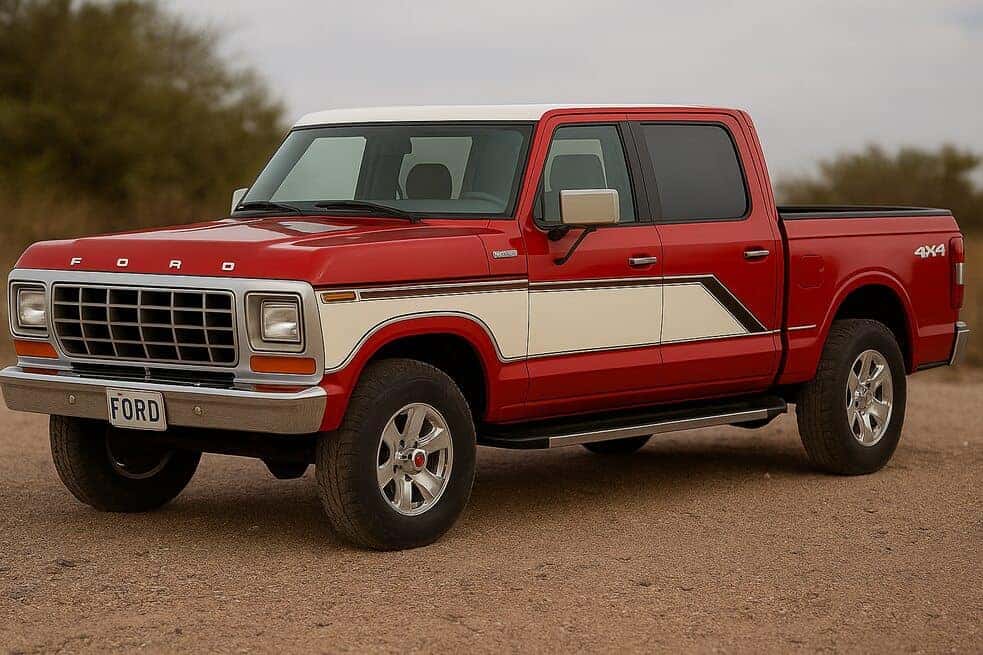
The big shift came in 1973 with a more squared look. Doors were larger, and the cab was wider. In 1975, the F-150 badge was born, slotting above the F-100. This marked the start of the legendary F-150 name.
The 1980 Redesign: A Modern Look Arrives
In 1980, Ford made a big leap. The new F-150 body featured a blocky, straight-edged design. The grille, headlights, and hood all looked more modern. This body style set the tone for the 1980s, making the truck look tough and ready for work or play.
Here’s a quick comparison of the 1979 and 1980 F-150:
| Year | Body Shape | Key Features |
|---|---|---|
| 1979 | Rounded | Curved fenders, classic look |
| 1980 | Squared | Boxy lines, flat panels |
This 1980s design lasted until 1986, with minor changes each year.
1987–1991: Smoother And Safer
For 1987, Ford softened the F-150’s lines. The front end became more aerodynamic. Headlights were integrated, and the grille got a more modern look. Inside, safety improved with new seat belts and better materials. This period was about small but important changes, making the truck safer and more comfortable.
1992–1996: Rounded Shapes Take Over
In 1992, Ford gave the F-150 a rounder shape. The hood, fenders, and grille all flowed together smoothly. This was a clear move toward the future, leaving behind the boxy 1980s look. The interior became more car-like, with better seats and controls.

Credit: www.hellerford.com
The Big Change: 1997–2003 F-150
The 1997 model year brought a huge shift. Ford redesigned the F-150 from the ground up. The body was fully rounded, with integrated bumpers and a modern look. The truck was built on a new platform, making it more comfortable and fuel-efficient.
Key features of the 1997–2003 F-150:
- Rounded body panels
- Flush headlights and grille
- More aerodynamic shape
- Improved interior comfort
This design was bold. Some traditional truck fans didn’t like the softer look at first, but it helped the F-150 lead the market.
2004–2008: Toughness Returns
In 2004, Ford returned to a bolder style. The F-150 got a bigger, more squared-off body and a high, flat hood. The grille was massive and stood out. This generation focused on strength, both in looks and engineering. The frame was fully boxed for better safety and toughness.
The interior also improved, with more space and new tech.
2009–2014: Refinement And Power
The 2009 F-150 looked similar to the 2004, but everything was updated. The body was smoother, the grille even larger, and the headlights bolder. Ford added new engines, including the EcoBoost option, giving more power and better fuel economy.
A look at engine options:
| Year | Main Engines | Notable Feature |
|---|---|---|
| 2009 | V6, V8 | Traditional powertrains |
| 2011 | EcoBoost V6 | Turbo, better MPG |
The Aluminum Revolution: 2015–2020
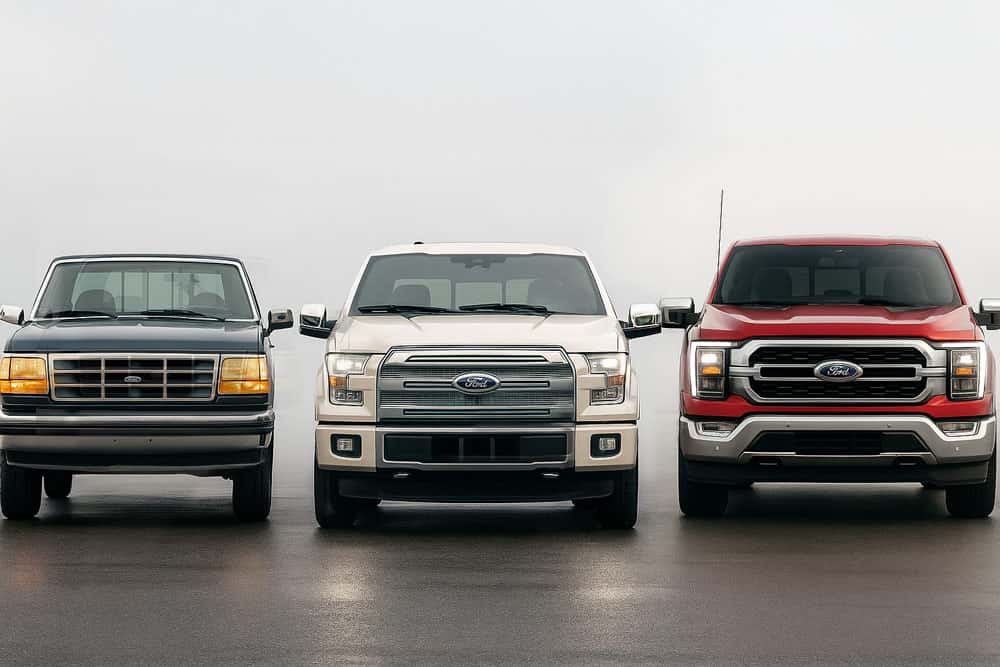
Ford shocked the industry in 2015 by switching the F-150’s body from steel to aluminum. This cut up to 700 pounds from the truck’s weight, improving fuel economy and handling. The design also got sharper, with crisp lines and a bold grille. This was a risky move, but it paid off—Ford stayed the best-selling truck in America.
Some insights most people miss:
- Aluminum is harder to repair than steel. Early on, some body shops weren’t ready, which worried buyers.
- The lighter weight meant the F-150 could tow more, even with smaller engines.
Credit: www.sturgisford.com
2021–present: Smart And Strong
The latest F-150, launched for the 2021 model year, keeps the aluminum body but adds more technology. The look is similar to the 2015–2020 trucks but with a larger grille, new lighting, and sharper details.
Major updates include:
- Hybrid engine option (PowerBoost)
- More high-tech features (touchscreens, driver aids)
- Fold-flat work surfaces inside
This generation is about blending toughness with smart features for work and daily life. Ford also introduced the F-150 Lightning, an all-electric model, showing the future of trucks.
Quick Timeline Of Major Body Style Changes
Here’s a summary of the most important F-150 body changes:
- 1948 – First F-Series, rounded, simple body
- 1957 – Wider cab, new grille
- 1965 – Twin I-Beam suspension, subtle updates
- 1973 – Squared body, larger cab
- 1980 – Major redesign, boxy shape
- 1987 – Smoother, safer look
- 1992 – Rounded lines
- 1997 – All-new, modern, aerodynamic body
- 2004 – Big, squared-off, tough look
- 2009 – Smoother, bolder details
- 2015 – Aluminum body, sharp lines
- 2021 – Advanced tech, refined style
Credit: www.sturgisford.com
Common Mistakes When Identifying F-150 Body Styles
Many people confuse facelifts (small changes to lights or grilles) with real body style changes (full redesigns). True body style updates mean new frames, panels, or major engineering shifts. Also, buyers sometimes focus only on the grille or badges, but the biggest changes are in shape, materials, and features.
Another detail: Ford sometimes kept old styles for fleet or work trucks even after new models launched. Always check the model year and VIN if you’re buying used.
Why Body Style Changes Matter
When Ford updates the F-150 body, it’s not just about looks. Each change often brings better safety, fuel economy, or comfort. For example, the switch to aluminum in 2015 made the truck lighter and more efficient. The 1997 redesign improved aerodynamics, which saved fuel.
Today’s F-150 is a mix of all these lessons—strong, smart, and stylish.
If you want to see historical photos or more details, visit the official Ford F-Series Wikipedia page.
Frequently Asked Questions
When Did Ford First Release The F-150?
The F-150 badge first appeared in 1975 as a step between the F-100 and F-250. It became the best-selling truck soon after.
What Was The Biggest F-150 Body Style Change?
The 1997 redesign was one of the biggest, switching from a boxy work truck to a rounded, car-like shape. The 2015 aluminum body was also a major step.
How Do I Tell Which F-150 Body Style I Have?
Check the model year and look for big features like grille shape, headlights, or body lines. VIN numbers can also help, especially for used trucks.
Did All F-150s Switch To Aluminum In 2015?
Yes, starting with the 2015 model year, all regular F-150s used an aluminum body. Some heavy-duty F-Series models kept steel for a while longer.
Does Body Style Affect F-150 Performance?
Yes. Newer body styles often mean better fuel economy, safety, and more features. For example, lighter aluminum bodies help with both MPG and towing.
The Ford F-150’s body style changes aren’t just about looks—they tell the story of American trucks evolving for drivers everywhere. Whether you love classic pickups or high-tech workhorses, each redesign has shaped the F-150 into today’s best-selling truck.
As an Amazon Associate, I earn from qualifying purchases.