Locating The Catalytic Converter On A Ford F150
The catalytic converter is a vital part of your Ford F150’s exhaust system. It helps reduce harmful emissions, turning toxic gases into safer ones before they leave your vehicle. If you own a Ford F150, knowing where the catalytic converter sits can help you with repairs, maintenance, and even theft prevention. Many truck owners are surprised to learn how easy it is to access this part—both for themselves and for thieves. This guide will give you clear steps, practical tips, and detailed comparisons to help you find the catalytic converter on your F150, no matter the model year.
What Is A Catalytic Converter?
A catalytic converter is a metal canister with a honeycomb structure inside, coated with sponge-like metals like platinum, palladium, and rhodium. It sits in your truck’s exhaust system, usually between the engine and the muffler. As exhaust gases pass through, chemical reactions break down pollutants like carbon monoxide and nitrogen oxides. This makes your F150 safer for the environment and helps meet emission laws.
Typical Location On The Ford F150
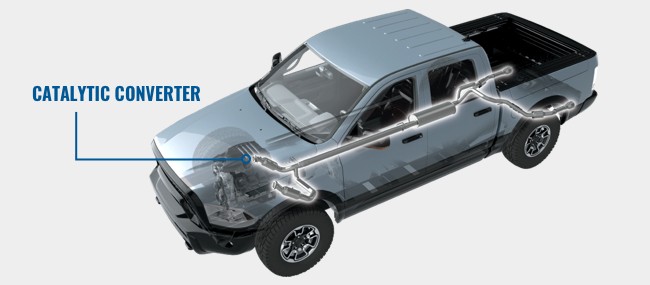
The position of the catalytic converter depends on your F150’s model year, engine type, and drive configuration (2WD or 4WD). However, all F150s have their catalytic converters beneath the truck, along the exhaust pipe that runs from the engine to the tailpipe.
You’ll usually find one or more catalytic converters:
- Below the cab area: Typically in the middle section, under the front seats.
- Close to the engine: In some models, right after the exhaust manifold.
Some F150s (especially newer ones or V8 engines) have more than one catalytic converter. The first is called the “upstream” converter, near the engine, and the second is the “downstream” converter, closer to the tailpipe.
Example: 2015–2023 Ford F150
- V6 and V8 engines: Two or more converters, one on each exhaust pipe.
- 4WD and 2WD: The location remains under the cab, but 4WD models may have more shielding.
Example: 2004–2014 Ford F150
- Single exhaust: One or two converters, located just after the exhaust manifold.
- Dual exhaust: Each pipe has its own converter.

Credit: www.youtube.com
How To Locate The Catalytic Converter
Finding the catalytic converter on your Ford F150 does not require special tools, but you should always wait for the truck to cool down before looking underneath.
- Park on a Level Surface: Put your F150 in park, set the emergency brake, and allow the engine to cool.
- Slide Under the Truck: Use a creeper or a piece of cardboard. Bring a flashlight.
- Look for the Exhaust Pipe: Find where the exhaust pipe exits the engine.
- Spot the Converter: The catalytic converter looks like a small, oval or rectangular metal box with heat shields and oxygen sensors attached. It is usually larger than the rest of the exhaust pipe.
Key Features To Identify
- Heat Shields: Most converters have a metal guard or shield around them.
- Oxygen Sensors: Small wires or plugs before and after the converter.
- Shape: The converter is wider than the pipe and may have a stamped serial number.
Differences By Model Year
Older and newer F150s have different converter layouts, numbers, and shapes. This table highlights the main differences:
| Model Year | Number of Converters | Main Location | Shape |
|---|---|---|---|
| 1997-2003 | 2 | Under cab, near engine | Oval/rectangular |
| 2004-2014 | 2-4 | After exhaust manifold, under seats | Larger, rounded edges |
| 2015-2023 | 2-4 | Under cab, close to transmission | Compact, oval |
Why Location Matters
Knowing where your F150’s catalytic converter is can save you time and money. If you hear a loud roaring sound or see warning lights, you can quickly check for damage. The location also matters for:
- Theft prevention: Thieves target converters for saleable precious metals.
- DIY repair: Accessing the converter is easier if you know its exact position.
- Inspection: Spotting leaks or rust early can prevent bigger problems.
Common Mistakes When Locating The Converter
Many owners make simple errors when looking for the catalytic converter:
- Confusing with the muffler: The muffler is further back, larger, and usually more rounded.
- Missing multiple converters: Some F150s have two or more converters, not just one.
- Ignoring heat: The converter gets extremely hot after driving. Always wait at least 30 minutes before touching any exhaust parts.
A practical tip: If you spot a part of the exhaust pipe with extra wires attached, you’re likely looking at the converter or an oxygen sensor.
How To Tell If The Converter Is Missing Or Damaged
Catalytic converter theft is a growing problem for trucks. Here’s how to check if yours is still there:
- Loud exhaust noise: Missing converters make the truck much louder, especially when starting.
- Check engine light: The dashboard warning will often appear if the converter or sensors are damaged or missing.
- Visible gap: You’ll see a cut section in the exhaust pipe under your truck.
Catalytic Converter Types On The F150
Depending on the engine and year, your F150 may have different converter types:
| Engine Type | Catalytic Converter Location | Number per Side |
|---|---|---|
| V6 | Close to manifold | 1-2 |
| V8 | Near engine, under cab | 2 |
| EcoBoost (Turbo) | After turbo, under seats | 2 |
Credit: www.walkerexhaust.com
Signs Of A Failing Catalytic Converter
Noticing these symptoms can help you act before bigger issues develop:
- Decreased power: The truck feels sluggish, especially during acceleration.
- Rattling noises: A broken converter can make a metallic rattling sound.
- Failed emissions test: High emissions or error codes.
Real-world Example
A 2018 Ford F150 owner noticed a loud noise and poor acceleration. After sliding under his truck, he saw a gap where the converter should be. The oxygen sensor wires were hanging loose—a clear sign of theft. His insurance covered the replacement, but he installed a protective shield for future safety.

Credit: www.youtube.com
Security And Protection Tips
To keep your catalytic converter safe:
- Park in well-lit areas or garages.
- Install a catalytic converter shield or cage.
- Etch your VIN onto the converter.
- Consider a security camera for your driveway.
These steps make your F150 less attractive to thieves.
When To Seek Professional Help
If you suspect converter damage or theft, or if you’re unsure about the part’s location, a trusted mechanic can help. Professional shops can inspect, repair, or replace the converter and check for other exhaust issues.
For more technical details, you can visit the Wikipedia: Catalytic Converter page.
Frequently Asked Questions
Where Is The Catalytic Converter On A Ford F150?
It is located under the truck, along the exhaust pipe, usually below the cab area or near the engine, depending on model year.
How Many Catalytic Converters Does A Ford F150 Have?
Most F150s have two to four converters, one for–or on–each exhaust pipe, depending on engine and year.
How Can I Tell If My Converter Was Stolen?
A loud exhaust sound, hanging sensor wires, a check engine light, or a visible gap in the exhaust system are all signs of theft.
Is It Safe To Drive Without A Catalytic Converter?
Driving without a converter is not safe for the environment, may be illegal, and can damage your engine over time.
How Do I Protect My Ford F150’s Catalytic Converter?
Park in safe places, install a shield, etch your VIN on the converter, and use security cameras if possible.
Locating the catalytic converter on your Ford F150 is straightforward once you know where to look. With this knowledge, you can keep your truck running smoothly, avoid costly mistakes, and protect against theft. If you’re ever unsure, don’t hesitate to get help from a professional.
As an Amazon Associate, I earn from qualifying purchases.