Can A Ford F150 Pull A Gooseneck Horse Trailer
Hauling a horse trailer is a serious task, especially when you need to keep animals safe and your vehicle in good condition. Many truck owners wonder if their Ford F150 is strong enough to pull a gooseneck horse trailer. With so many different F150 models and types of horse trailers, the answer is not always simple. This guide will break down what you need to know, from towing capacity to real-world tips, so you can make the best decision for your truck and your horses.
Understanding Ford F150 Towing Capacity
The towing capacity of a Ford F150 changes based on engine, axle ratio, and configuration. In general, recent F150s can tow between “5,000 to 14,000 pounds” with the right setup. Most gooseneck horse trailers weigh more than a bumper-pull trailer, so understanding your truck’s limits is essential.
- Base V6 models: Lower towing, often under auxiliary braking limits.
- EcoBoost V6 & V8 models: Higher towing, sometimes over 12,000 lbs with max tow package.
- Diesel option: Good for heavy loads, but not always available.
- Max Tow Package: Increases hitch and payload ratings.
You must check your specific F150’s door sticker or owner’s manual for exact numbers.
What Makes A Gooseneck Horse Trailer Different
A gooseneck trailer connects to a ball in the truck bed, not at the bumper. This makes the trailer more stable and allows for larger loads. But it also means more weight sits directly over the truck’s rear axle, increasing the payload on your truck.
- Gooseneck horse trailers often weigh 7,000-10,000 pounds empty.
- When loaded with horses, tack, and feed, weights can reach 12,000-16,000 pounds.
This is heavier than many F150s are rated to pull, especially when you count payload (the weight over the rear axle).
Matching Truck To Trailer: Key Factors
To decide if your F150 can pull a gooseneck horse trailer, compare these numbers:
- Trailer Gross Vehicle Weight Rating (GVWR)
- F150 Max Tow Rating
- F150 Payload Rating (not just towing, but weight in the bed)
- Gooseneck hitch weight (often 15-25% of trailer weight)
- Number of horses and gear
If your trailer, loaded, is close to or over your truck’s max numbers, it is not safe to tow.
Real-world Example
Suppose you have a 2023 F150 4×4 with the 3.5L EcoBoost and Max Trailer Tow Package:
- Max towing: 14,000 lbs
- Max payload: 2,100 lbs
You want to pull a 3-horse gooseneck trailer, 8,000 lbs empty. With three horses, hay, and gear, the trailer weighs 13,500 lbs. The gooseneck hitch puts about 2,025 lbs (15%) on the truck’s bed. This is just under the max towing, but right at the payload limit.
Any extra gear, people, or fuel can push you over.
Towing Safety And Laws
Even if your F150’s numbers match up, you must consider:
- Braking: Gooseneck trailers need electric trailer brakes.
- Legal limits: Some states require a bigger truck for certain weights.
- Insurance: Overloaded trucks may not be covered in an accident.
Never push your truck to its absolute max for safety reasons.
Comparison: F150 Vs. Heavier Trucks
Here’s a quick look at how the F150 compares to bigger trucks.
| Truck Model | Max Tow Capacity | Max Payload |
|---|---|---|
| Ford F150 (3.5L EcoBoost, Max Tow) | 14,000 lbs | 2,100 lbs |
| Ford F250 Super Duty | 20,000 lbs | 4,260 lbs |
| Ram 2500 | 19,990 lbs | 4,010 lbs |
As you can see, heavy-duty trucks handle gooseneck trailers more easily.
Common Mistakes To Avoid
Many people make costly errors when towing:
- Ignoring payload: Focusing only on towing numbers.
- Assuming empty weight: Not counting horses or gear.
- Skipping trailer brakes: Not installing or using a brake controller.
- Not checking tongue weight: Gooseneck hitches add more bed weight than bumper pulls.
Tips For Safe Towing With An F150
If you decide to pull a gooseneck horse trailer with your F150, follow these tips:
- Weigh your loaded trailer at a truck stop or weigh station.
- Use a quality gooseneck hitch rated for your trailer’s size.
- Install a brake controller for the trailer brakes.
- Check tire pressures on both truck and trailer.
- Drive slowly and carefully; goosenecks are more stable, but stopping distances are longer.

Credit: highlandford.com
Payload Vs. Towing: Critical Difference
Many F150 owners confuse towing capacity with payload. The F150 may “tow” a gooseneck trailer, but the payload is often the limiting factor. If the hitch weight is too heavy, the truck may squat, handle poorly, or break parts.
Here’s a simple comparison:
| Truck | Towing Capacity | Payload Capacity | Gooseneck Hitch Weight |
|---|---|---|---|
| F150 (Max Tow) | 14,000 lbs | 2,100 lbs | 1,800-2,500 lbs |
| F250 Super Duty | 20,000 lbs | 4,000+ lbs | 2,500-3,500 lbs |
Notice how the hitch weight may push the F150’s payload to the limit, even if you are under the tow rating.
Are F150s Commonly Used For Gooseneck Trailers?
You will sometimes see F150s hauling small gooseneck horse trailers, but most professionals use 3/4-ton or 1-ton trucks. These bigger trucks are designed for heavy loads, have stronger brakes, and last longer under stress.
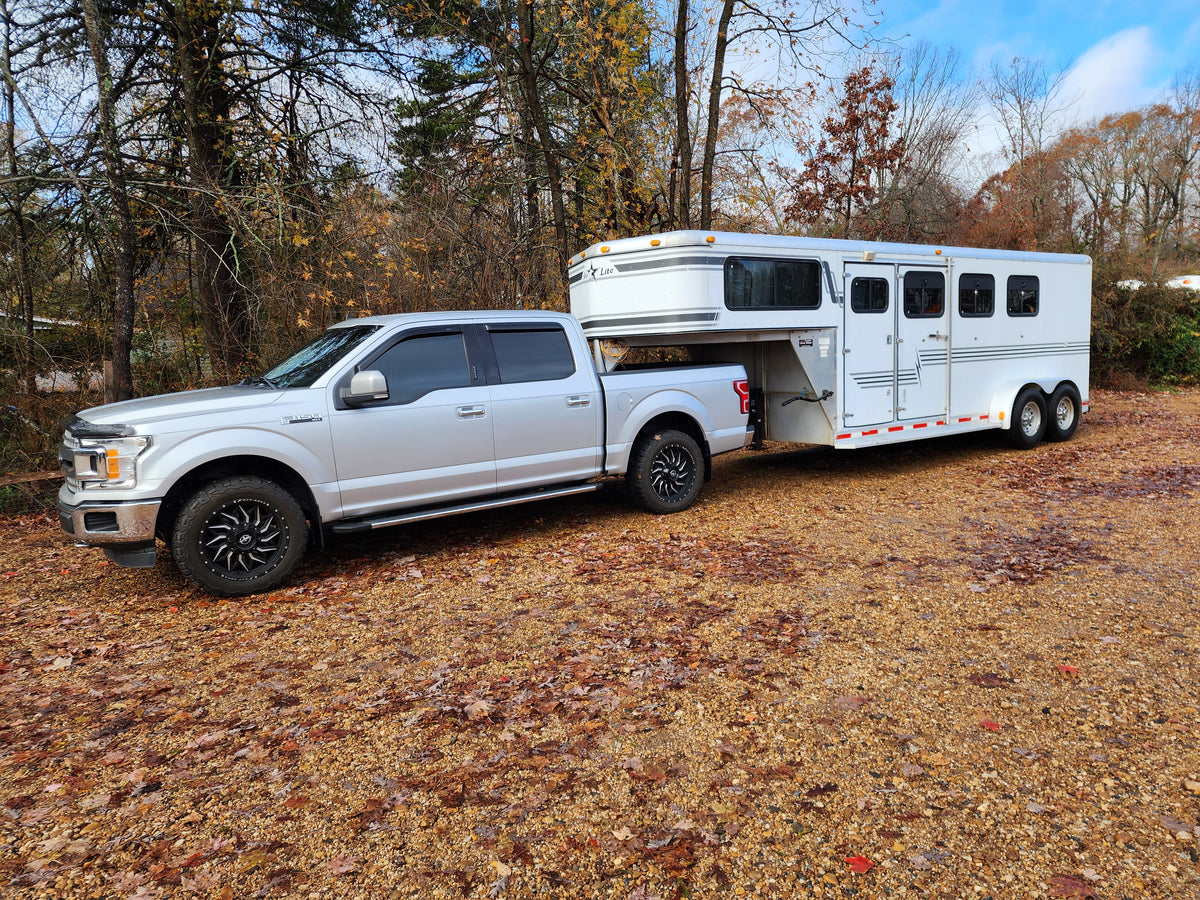
Credit: www.roadactivesuspension.com
Non-obvious Insights
- Short-bed F150s may have trouble making sharp turns with a gooseneck, as the trailer can hit the cab. Use a sliding hitch for short beds.
- Aluminum trailers are lighter than steel, helping to stay under limits with an F150.
When To Upgrade Your Truck
If you plan to haul more than two horses or carry a lot of gear, consider a heavier-duty truck. It’s not just about towing; it’s about safety, reliability, and peace of mind.

Credit: www.f150forum.com
Useful Resources
For more details on towing and trailer safety, check the official Ford towing guide.
Frequently Asked Questions
Can Every F150 Pull A Gooseneck Horse Trailer?
Not every F150 is rated to pull a gooseneck horse trailer. You need the right engine, axle ratio, and towing package. Always check your truck’s door sticker or manual.
How Much Can An F150 Safely Tow?
Depending on the model, most F150s can tow between 5,000 and 14,000 pounds. For gooseneck trailers, payload is often the bigger limit.
What Is The Main Risk Of Towing A Gooseneck With An F150?
The main risk is overloading the rear axle (payload). This can cause poor handling, brake failures, and unsafe driving.
Can You Pull A Three-horse Gooseneck With An F150?
It is possible with a light trailer and minimal gear, but you are likely at the edge of the truck’s limits. More than two horses with gear usually requires a bigger truck.
Are There Lightweight Gooseneck Horse Trailers For F150s?
Yes, some manufacturers offer aluminum gooseneck trailers designed for half-ton trucks. Always check the trailer weight and loaded weight before towing.
Pulling a gooseneck horse trailer with a Ford F150 is possible in some cases, but always check your numbers, drive carefully, and consider upgrading if you haul heavy or often. Your horses and your truck will thank you.
As an Amazon Associate, I earn from qualifying purchases.