Finding the starter on a Ford F150 can feel tricky, especially if you are not familiar with trucks or engine layouts. Many people search under the hood and get confused by the number of parts. If your Ford F150 is not starting and you suspect the starter, knowing exactly where it is helps you save time and avoid mistakes.
This guide breaks down the location of the starter in different Ford F150 models, explains how to identify it, and shares practical tips for safely accessing and inspecting the starter. Even if you are not an expert, you will understand what to look for and how to proceed with confidence.
What Is A Starter And Why Does Location Matter?
The starter is a small but powerful electric motor that turns your engine over when you turn the ignition key. Without it, your truck will not start. On a Ford F150, the starter is mounted near the engine and transmission because it needs to engage the flywheel or flexplate to crank the engine.
Many drivers, especially beginners, often confuse the starter with other engine parts. Mistaking it for something else can lead to wasted effort, wrong part replacements, or even safety risks. That is why knowing the starter’s exact location is important when diagnosing starting problems.
Starter Location By Ford F150 Generation
The location of the starter on a Ford F150 can change slightly depending on the model year and engine type. Here’s a breakdown by generation to help you find it more easily.
1980–1996 Ford F150
- The starter is located on the passenger side (right side) of the engine.
- It sits near the bottom of the engine, attached to the bell housing of the transmission.
- From underneath the truck, look for a cylindrical metal part, usually about 8 inches long, bolted to the transmission case.
1997–2003 Ford F150
- The starter remains on the passenger side for most engines, like the 4.2L V6, 4.6L V8, and 5.4L V8.
- You will find it low down, below the exhaust manifold, near where the engine meets the transmission.
- Usually, it is easiest to access from under the truck.
2004–2008 Ford F150
- For both 4.2L, 4.6L, and 5.4L engines, the starter is still on the lower passenger side.
- Expect it to be attached to the side of the transmission.
- Some 5.4L engines may have extra shields or wiring, but the location is consistent.
2009–2014 Ford F150
- The starter remains on the passenger side, very close to the bottom of the engine.
- You may need to remove a plastic splash shield for better access.
- On some 3.7L and 5.0L models, space is tight, but the starter’s location does not change.
2015–2024 Ford F150
- For the newer F150s, including EcoBoost (2.7L, 3.5L), 5.0L, and PowerStroke diesel, the starter is still on the passenger side, low and towards the rear.
- In hybrid versions, the starter-generator system is integrated, but the basic location remains similar.
- Access often requires removing plastic covers or shields.
Here is a quick comparison of starter positions for different engine types:
| Model Year | Engine Type | Starter Location | Access Point |
|---|---|---|---|
| 1997–2003 | 4.2L V6 | Passenger side, lower | From under truck |
| 2004–2008 | 5.4L V8 | Passenger side, lower | Remove shield |
| 2015–2024 | 3.5L EcoBoost | Passenger side, low rear | Remove plastic cover |
How To Identify The Starter
Spotting enginge parts can be confusing. The starter on a Ford F150 usually looks like a small, round, metal cylinder attached to a slightly larger, bell-shaped housing. Here is how you can identify it:
- Cylindrical shape: About 6–10 inches long.
- Two or three bolts: Fasten it to the transmission bell housing.
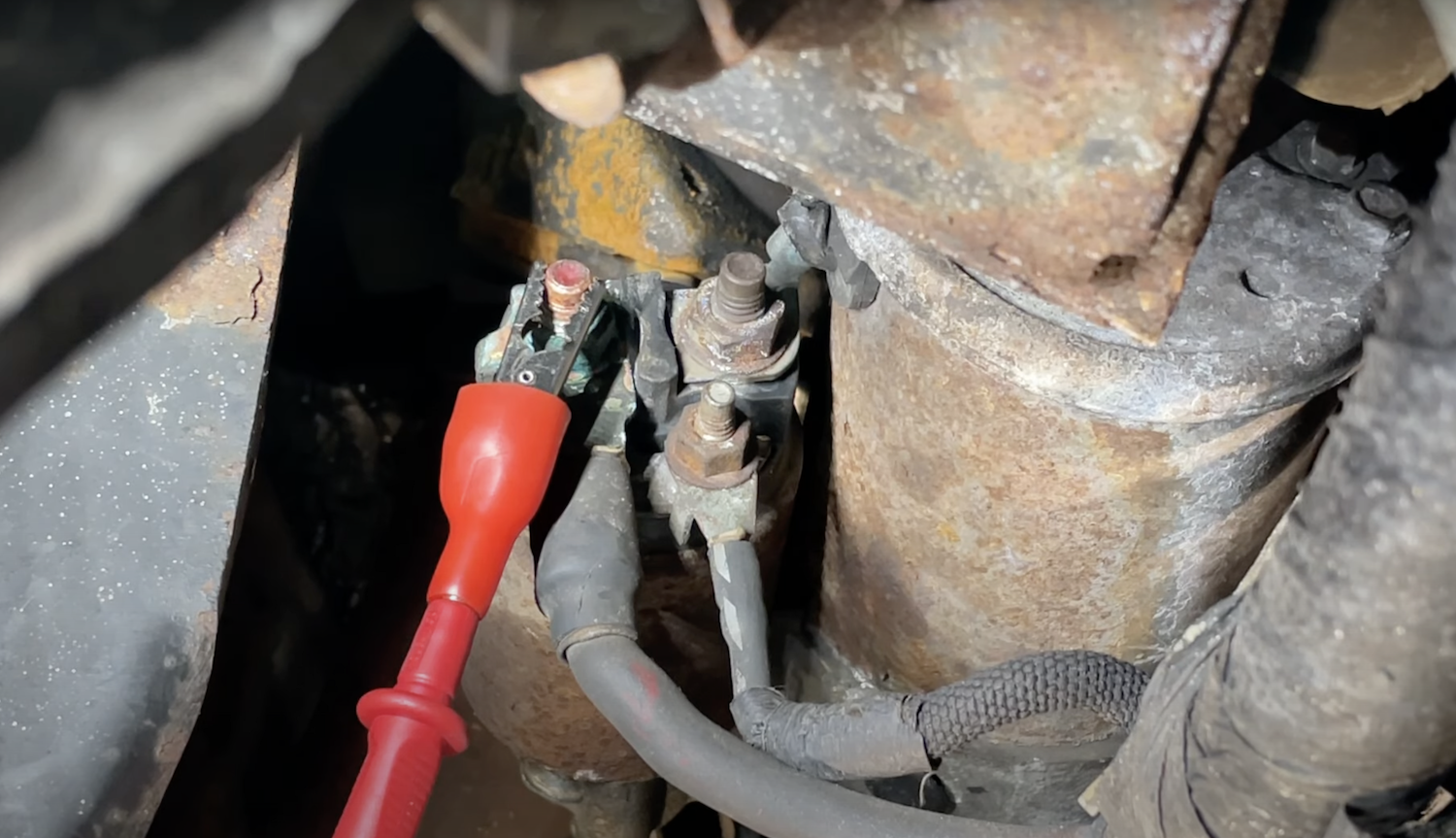
- Heavy wires: One thick cable comes from the battery, and a smaller wire (solenoid wire) is attached.
- Sound: When you turn the key, the starter makes a clicking or whirring noise—if you are close enough.
A common mistake is confusing the starter with the alternator or the AC compressor. These are different parts and are usually higher up in the engine bay.
Steps To Access The Starter On Your F150
Accessing the starter is not very hard if you have the right tools and follow some safety steps. Here is a step-by-step process:
- Turn off the engine and remove the key.
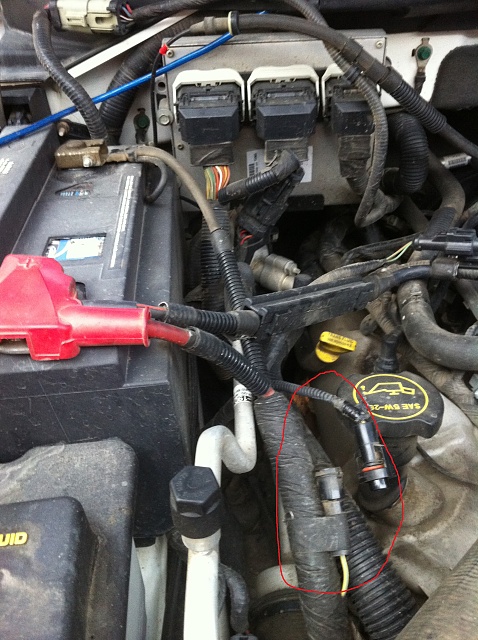
- Disconnect the battery: Always disconnect the negative cable first to prevent electric shock.
- Lift the front of the truck using a jack and secure it with caution.
- Find the starter: Go to the passenger side, look underneath, and locate the cylindrical starter at the transmission joint.
- Remove covers or shields if your model has them.
- Unplug the wires: Mark them for ending up in the correct position during reinstallation.
- Unbolt the starter using a ratchet and socket.
Here’s a table to compare the difficulty and time needed for different F150 generations:
| Model Year | Access Difficulty | Estimated Time |
|---|---|---|
| 1997–2003 | Easy | 30–45 minutes |
| 2009–2014 | Medium | 45–60 minutes |
| 2015–2024 | Hard | 60–90 minutes |

Credit: www.youtube.com
Useful Tips For Replacing Or Inspecting The Starter
- Always label the wires before removal. Mixing up the thick battery cable and the solenoid wire can cause starting problems or damage.
- Check for corrosion on the terminals; sometimes, cleaning them fixes starting problems.
- Test the battery first. A weak battery often gets confused with a bad starter.
- Wear gloves and safety glasses, especially when working under the truck.
- If your F150 has a skid plate or splash shield, be prepared to remove it for better access.
Common Mistakes When Locating The Starter
- Looking on the driver’s side: The starter is almost always on the passenger side.
- Confusing parts: The alternator and starter look similar but are in different positions.
- Not disconnecting the battery: This can lead to sparks or even injury.
- Ignoring shields: Some shields must be removed to see or reach the starter.
Knowing these mistakes helps you avoid frustration and do the job safely.
Credit: exeterarms.co.uk
When Should You Check Or Replace The Starter?
You may need to find and check the starter if:
- The engine will not crank, but lights and radio work.
- You hear a single click or repeated clicking when turning the key.
- There is visible smoke or burning smell near the starter area.
- Jump-starting does not work, but the battery is good.
If you suspect the starter is bad, check it before buying a new one. Sometimes, the issue is a loose wire or weak battery.
For more technical details, you can refer to the official Ford F-Series Wikipedia page.
Frequently Asked Questions
Where Is The Starter Located On A 2010 Ford F150?
The starter is on the passenger side, near the bottom of the engine, attached to the transmission bell housing. It is best accessed from underneath the truck.
Do I Need To Remove The Battery To Replace The Starter?
Yes, always disconnect the battery before removing the starter. This prevents electric shocks and protects your vehicle’s electronics.
Can I Access The Starter From Above The Engine Bay?
On most Ford F150s, the starter is easier to reach from underneath. Access from the top is very limited due to other engine parts blocking the view.
How Can I Tell If The Starter Is Bad Or Just The Battery?
If your battery is fully charged but you hear a single click or nothing at all when turning the key, it is likely a starter problem. If the lights are dim or fade out, check the battery first.
Is The Starter In The Same Place On All Ford F150 Engines?
The starter is almost always on the passenger side, low near the transmission, for all major F150 engines. Minor differences exist between years, but the location is generally consistent.
Understanding where the starter is on your Ford F150 makes repairs and diagnostics much easier. With the right information, you can save time, avoid mistakes, and keep your truck running strong.
Credit: www.f150forum.com
As an Amazon Associate, I earn from qualifying purchases.