Owning a Ford F150 means you rely on your truck for everything from daily work to family trips. One detail many drivers overlook is tire pressure. This small number has a big effect on your truck’s safety, fuel economy, and how it handles. If you’re unsure what the right tire pressure is for your F150, or why it matters, you’re not alone. Let’s break down exactly what you need to know so you can keep your truck running smoothly and safely.
Why Tire Pressure Matters For Your Ford F150
Your F150 is built to handle tough jobs, but its performance depends on the right tire pressure. Here’s why:
- Safety: Under-inflated tires can overheat and may blow out, especially when carrying heavy loads. Over-inflated tires make it harder to control your truck, especially on wet or uneven roads.
- Fuel Efficiency: Tires at the right pressure roll more smoothly, so your F150 uses less fuel.
- Tire Life: Proper pressure helps tires wear evenly. This means you won’t need to replace them as often.
- Ride Comfort: The right pressure gives a smoother, more comfortable ride.
What Is The Correct Tire Pressure For A Ford F150?
The recommended tire pressure for a Ford F150 depends on the model year, trim, and tire size. However, most F150s need between 35 and 36 PSI (pounds per square inch) in their tires for normal driving.
You can always find the exact number for your truck on a sticker inside the driver’s door. It lists the correct pressure for both the front and rear tires, and sometimes for the spare. This is the number Ford engineers chose for best safety and performance.
Here’s a quick look at common F150 tire pressure recommendations:
| Model Year | Standard Tire Size | Recommended Tire Pressure (PSI) |
|---|---|---|
| 2023 | 265/70R17 | 35 (Front & Rear) |
| 2020 | 275/65R18 | 35 (Front & Rear) |
| 2017 | 275/55R20 | 35 (Front & Rear) |
| 2015 | 235/75R17 | 35 (Front & Rear) |
Note: Some F150 models with heavy-duty packages or towing upgrades may have higher pressure needs, especially for the rear tires. Always double-check your specific sticker.

Credit: www.willowbrookford.net
How To Check And Adjust Tire Pressure
Keeping your F150’s tire pressure in the right range is simple. Here’s what to do:
- Find the recommended PSI: Look for the sticker on your driver’s door or check your owner’s manual.
- Buy a good tire gauge: Digital or dial gauges are more accurate than the ones at gas stations.
- Check when tires are cold: Tire pressure rises as you drive. Check the pressure before driving or after your truck sits for at least 3 hours.
- Remove the valve cap: Press the gauge onto the valve stem firmly.
- Read the number: Compare it to the recommended PSI.
- Add or release air as needed: Use an air compressor to add air. If there’s too much, press the valve gently to let some out.
- Repeat for all tires: Don’t forget the spare.
Tip: Changes in weather can affect tire pressure. Cold weather usually lowers PSI, while heat can raise it. Check your tires more often when temperatures change.
How Tire Pressure Changes With Load And Towing
The Ford F150 is often used for towing or carrying heavy loads. In these cases, tire pressure needs can change:
- Carrying Heavy Loads: If you’re filling the bed with tools or supplies, check your manual. It may recommend a higher PSI for the rear tires.
- Towing a Trailer: Extra weight puts more stress on your rear tires. Some F150 trims advise increasing rear tire pressure for safe towing.
Here’s a comparison of regular vs. loaded tire pressures:
| Condition | Front Tire PSI | Rear Tire PSI |
|---|---|---|
| Normal Driving | 35 | 35 |
| Heavy Load/Towing | 35 | 40 (check your manual) |
Caution: Never inflate beyond the maximum PSI listed on the tire’s sidewall. Too much pressure can make tires more likely to burst.
Common Mistakes When Setting Tire Pressure
Many drivers make simple errors that can cost money or cause safety problems. Avoid these common mistakes:
- Relying on visual checks: A tire can look “fine” but be under-inflated by several PSI. Always use a gauge.
- Setting pressure when tires are hot: Hot tires give a higher reading. This leads to under-inflation.
- Ignoring the spare: Flat spares are useless in emergencies. Check the spare every month.
- Assuming all F150s use the same PSI: Different trims, tires, and years may have unique needs.
How Proper Tire Pressure Impacts Performance
The right PSI isn’t just about safety—it changes how your F150 feels and works:
- Steering Response: Properly filled tires turn and stop more predictably.
- Brake Distance: The right pressure helps your F150 stop faster in emergencies.
- Noise and Comfort: Over-inflated tires make the ride rough. Under-inflated tires can feel “squishy” and noisy.
- Saving Gas: A U.S. Department of Energy study found that every 1 PSI drop in pressure can lower gas mileage by 0.2%. That adds up over a year.

Credit: www.reddit.com
When To Change Your Tire Pressure
Most F150 owners should check and adjust tire pressure at least once a month. Also check if:
- The weather changes by 10°F (about 5.5°C) or more.
- You’re about to tow or haul heavy loads.
- You notice your truck feels different—like drifting or rough rides.
- Your tire pressure warning light comes on.
How To Reset Your F150 Tire Pressure Sensor
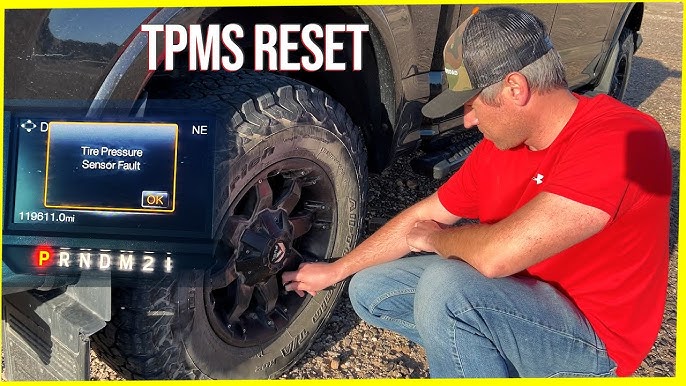
Modern F150s have a tire pressure monitoring system (TPMS). If you adjust your tires and the light stays on, you may need to reset the system:
- Fill all tires (including the spare) to the recommended PSI.
- Drive the truck for at least 10 minutes at 30 mph or more.
- The warning light should turn off. If not, consult your manual or a dealer.
If you replace tires or sensors, a special reset tool may be needed. This is a step that sometimes confuses new owners.
For more information, check the official Ford Owner Guide.
Credit: www.youtube.com
Frequently Asked Questions
What Is The Recommended Tire Pressure For Most Ford F150s?
Most Ford F150s use 35 PSI in all four tires for normal driving. Always check the sticker on your driver’s door for your exact model.
Does Tire Pressure Change With Bigger Aftermarket Tires?
Yes. If you switch to larger or different tires, the correct PSI may change. Use the tire manufacturer’s guidelines and consult a trusted tire shop.
How Often Should I Check My F150’s Tire Pressure?
Check tire pressure at least once a month and before long trips or carrying heavy loads. Also check when weather changes a lot.
What Happens If I Drive With Low Tire Pressure?
Driving with low pressure can cause tire damage, poor fuel economy, and even blowouts. It also makes your F150 handle poorly and stop less quickly.
Why Does My Tire Pressure Warning Light Stay On After Day-to-day Driving?
If the TPMS light stays on, it could be a sensor issue, a slow leak, or a need for reset. Fill all tires to the right PSI, drive for 10 minutes, and see if it turns off. If not, get it checked by a professional.
Keeping your Ford F150’s tires at the correct pressure is a simple way to stay safe, save money, and get the most out of your truck. A few minutes each month can make a big difference in sopower, comfort, and peace of mind.
As an Amazon Associate, I earn from qualifying purchases.