

Are you wondering how to figure out the salvage value of your assets? Knowing this number can save you money and help you make smarter decisions about your investments.
Whether you’re managing equipment, vehicles, or property, understanding salvage value is key to planning your finances and taxes. You’ll discover simple steps to calculate salvage value, avoid common mistakes, and use this knowledge to your advantage. Keep reading—you’re about to unlock a straightforward way to get the most from your assets.
What Is Salvage Value
Salvage value is a key concept in accounting and finance. It refers to the estimated worth of an asset at the end of its useful life. This value helps businesses decide how much to depreciate an asset over time.
Understanding salvage value is important for budgeting and tax purposes. It also guides decisions about replacing or selling old equipment.
Definition Of Salvage Value
Salvage value is the expected resale price of an asset after full use. It is also called scrap value or residual value. This amount is usually less than the asset’s original cost.
Role Of Salvage Value In Depreciation
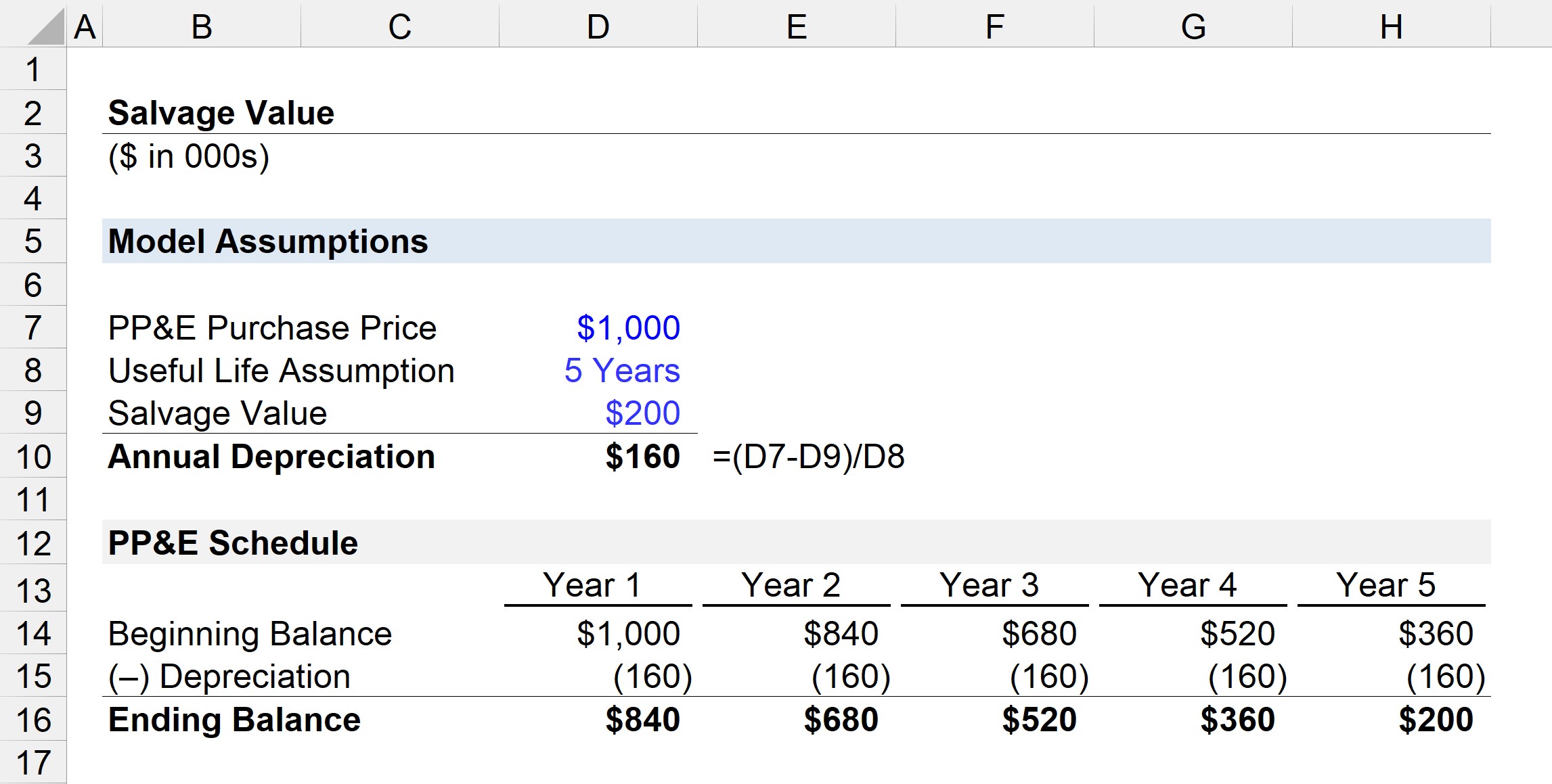
Salvage value helps calculate depreciation expenses. Depreciation spreads the asset’s cost over its useful life. Subtracting salvage value ensures the asset is not depreciated below its final worth.
How Salvage Value Affects Financial Statements
Salvage value impacts profit and loss reports. It also affects the balance sheet by showing the asset’s remaining value. Accurate salvage value leads to better financial planning.
Credit: www.wallstreetprep.com
Why Salvage Value Matters
Salvage value is the estimated worth of an asset at the end of its useful life. It helps businesses know how much money they can recover from old equipment or assets. This value is important for making smart financial decisions.
Knowing the salvage value affects how a company calculates depreciation. Depreciation shows how much value an asset loses over time. A correct salvage value means more accurate expense records and better budgeting.
Salvage value also influences tax calculations. Businesses can reduce their taxable income by accounting for depreciation properly. This can lead to savings and better cash flow management.
In case of asset disposal, salvage value sets a clear price point. It helps decide whether to sell, trade, or scrap the asset. This avoids losses and ensures better asset management.
Impact On Depreciation Calculations
Depreciation shows how assets lose value over time. Salvage value helps set the final worth of the asset. Subtracting salvage value from purchase price gives the depreciable amount. This makes depreciation more precise and fair.
Role In Financial Planning
Businesses use salvage value to plan budgets and expenses. It helps forecast future costs and revenues. Knowing this value helps avoid surprises during asset replacement. It guides decisions on buying new equipment or keeping old ones.
Effect On Tax Reporting
Tax laws allow depreciation to reduce taxable income. Salvage value affects how much depreciation a business can claim. Accurate salvage value means correct tax deductions. This helps avoid penalties and ensures compliance with tax rules.
Guidance For Asset Disposal
Salvage value sets a minimum price for selling old assets. It helps decide if selling or scrapping is better. This prevents selling below value and losing money. It supports smart asset replacement strategies.
Key Factors Affecting Salvage Value
Salvage value is the estimated worth of an asset at the end of its useful life. This value is not fixed. Several key factors affect how much an asset will be worth after years of use. Understanding these factors helps in accurate financial planning and asset management.
Asset Condition
The physical state of an asset affects its salvage value. Well-maintained assets usually have higher salvage values. Damaged or worn-out assets lose value faster. Condition impacts how much buyers are willing to pay at the end.
Market Demand
Market demand influences the salvage value strongly. If many buyers want a particular asset, its salvage value rises. Low demand pushes prices down. Trends in the industry also affect how much an asset is worth.
Age Of The Asset
Older assets generally have lower salvage values. As an asset ages, wear and tear reduce its worth. Newer assets tend to keep more value. The expected lifespan matters when calculating salvage value.
Technological Changes
Technology advances can decrease salvage value. Outdated equipment becomes less useful and less valuable. New technology may replace old assets quickly. This lowers the estimated salvage value.
Economic Conditions
Economic factors influence salvage value too. During a strong economy, asset values rise. In a weak economy, values drop. Inflation and interest rates also play a role.
Credit: www.educba.com
Basic Formula For Salvage Value
Understanding the basic formula for salvage value helps you find an asset’s worth at the end of its use. Salvage value is the estimated amount you can get by selling or disposing of an asset after it has fully depreciated. Calculating this value allows better planning for expenses and investments.
The formula is simple and clear. It uses the asset’s initial cost and expected depreciation over time. This helps determine what remains at the end of its useful life.
What Is Salvage Value?
Salvage value is the expected resale price of an asset. It’s what you think the asset will be worth after it has been used for many years. This value is important for calculating depreciation and accounting.
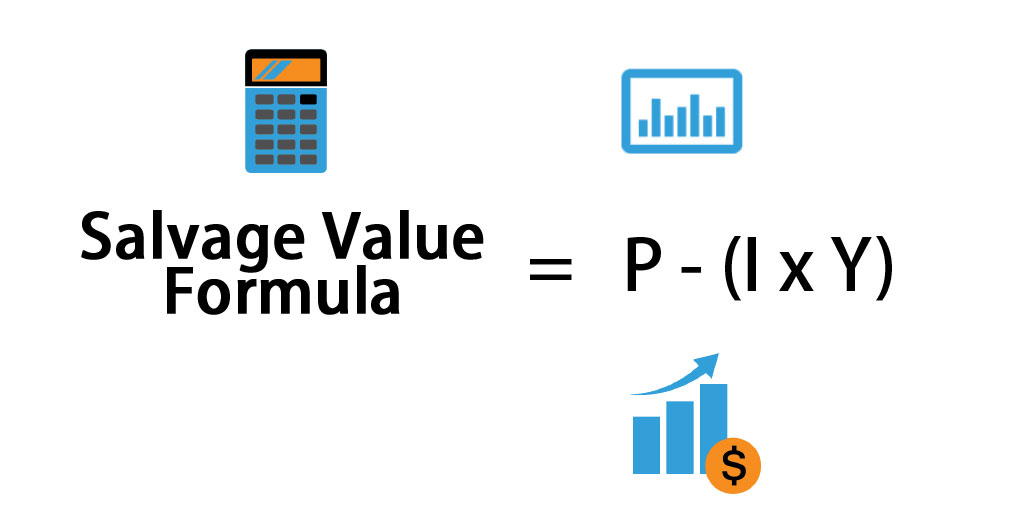
The formula for salvage value is:
Salvage Value = Cost of Asset – Accumulated Depreciation
Cost of asset is the price paid to buy it. Accumulated depreciation is the total loss in value over time. Subtracting depreciation from the cost gives the salvage value.
Example Of Salvage Value Calculation
Imagine you buy a machine for $10,000. After five years, it loses $7,000 in value. The salvage value is $10,000 minus $7,000, which equals $3,000. This means the machine is worth $3,000 after five years.
Step-by-step Calculation Process
Calculating salvage value involves a clear step-by-step method. This process helps you find the asset’s worth at the end of its use. Each step is simple and logical. Follow these steps carefully to get an accurate salvage value.
Estimate Asset Lifespan
First, decide how long the asset will last. This is the asset lifespan. It depends on how you use the asset and its quality. Check the manufacturer’s guide or past experience. Estimate the number of years the asset will work well.
Determine Original Cost
Next, find the original cost of the asset. This is the price paid when buying it. Include all expenses like purchase price, shipping, and installation. Use the total cost as the starting point for your calculation.
Assess Expected Residual Worth
Finally, estimate the asset’s value after its lifespan ends. This is the expected residual worth. Consider how much you can sell it for or its scrap value. This amount is usually much less than the original cost.
Common Methods To Estimate Salvage Value
Estimating salvage value is crucial for accurate financial records and depreciation calculations. Several common methods help determine this value. Each method fits different situations and asset types.
Understanding these methods allows better decisions about asset worth at the end of its use. Here are the most common approaches to estimate salvage value.
Market Comparison Approach
This method looks at similar used assets in the market. It finds the price buyers pay for these assets. The average price gives an idea of the salvage value.
It works well when there is an active market for the asset type. This approach reflects real market conditions and demand.
Cost-based Approach
This approach calculates the salvage value based on the asset’s cost. It subtracts depreciation and wear from the original cost. The remaining amount estimates the salvage value.
This method suits assets with clear cost records but less market data. It focuses on the asset’s condition and usage over time.
Percentage Of Original Cost Method
This method uses a fixed percentage of the asset’s original cost. The percentage depends on the asset type and industry standards. It provides a quick estimate of salvage value.
Simple and fast, this method helps in rough calculations. It is common for small businesses and quick accounting needs.
Tips For More Accurate Estimates
Estimating salvage value needs care and good information. This helps avoid mistakes in your calculations. Follow these tips for better and more accurate estimates. Each step adds value and reduces guesswork.
Start with solid data. Know your industry rules. Check the condition of your asset closely. These steps build a strong base for your estimate.
Use Reliable Data Sources
Start with trustworthy information. Use recent sales records for similar assets. Check company records and market reports. Reliable data gives a clearer picture of asset value. Avoid old or incomplete information.
Consider Industry Standards
Every industry has rules for asset value. Study these standards carefully. They guide you on typical depreciation and value limits. Use industry benchmarks to compare your estimate. This keeps your value realistic and accepted.
Adjust For Wear And Tear
Check the asset’s condition closely. Note any damage or heavy use. Reduce the estimated value for wear and tear. This step reflects the true worth. It prevents overestimating the salvage value.
Impact On Depreciation And Financial Reporting
Salvage value plays a key role in depreciation and financial reporting. It affects how much expense a company records each year. Accurate calculation helps show the true value of assets over time. It also impacts profit and loss statements.
Understanding salvage value is essential for clear financial reports. It helps estimate how much an asset will be worth at the end of its use. This figure lowers the total cost to be depreciated, affecting the expense amount annually.
How Salvage Value Affects Depreciation Expense
The salvage value reduces the total cost of an asset for depreciation. Depreciation expense equals the asset’s cost minus salvage value, divided by useful life. A higher salvage value means less expense each year.
It prevents over-depreciation of assets. Without salvage value, expenses would be too high, lowering profits incorrectly. This balance ensures expenses match the asset’s actual use and aging.
Role In Financial Statements
Salvage value impacts the balance sheet and income statement. It helps show a realistic asset value after depreciation. This value appears under property, plant, and equipment.
On the income statement, depreciation expense reduces taxable income. Correct salvage value means accurate expense reporting. This accuracy supports better financial decisions by managers and investors.
Impact On Tax Calculations
Tax rules often require using salvage value for depreciation. It helps calculate allowable deductions properly. Using the right salvage value prevents tax errors and penalties.
Tax authorities want to see fair asset valuation. Salvage value ensures the business does not claim too much depreciation. This compliance keeps finances healthy and legal.

Credit: www.youtube.com
Frequently Asked Questions
What Is Salvage Value In Asset Depreciation?
Salvage value is the estimated residual value of an asset after its useful life. It helps calculate depreciation by subtracting this value from the asset’s original cost.
How Do You Determine Salvage Value Accurately?
Salvage value is determined by evaluating the asset’s condition, market demand, and potential resale price at the end of use. Experts or historical data can help estimate it precisely.
Why Is Salvage Value Important In Accounting?
Salvage value affects depreciation expenses and net asset value. It ensures accurate financial reporting by preventing over-depreciation and reflecting the asset’s true worth after use.
Can Salvage Value Be Zero Or Negative?
Yes, salvage value can be zero if the asset has no resale value. It is rarely negative, as disposal costs are usually accounted separately.
Conclusion
Calculating salvage value helps you know an asset’s worth after use. It guides better financial decisions and tax planning. Always estimate carefully to avoid mistakes in your records. Use simple steps and reliable data for accuracy. Understanding this value saves money and time in the long run.
Keep your calculations clear and update them when needed. This small effort improves how you manage your assets.
As an Amazon Associate, I earn from qualifying purchases.
