

Have you ever wondered how reliable your devices really are? Understanding how long a product is expected to last can save you time, money, and frustration.
That’s where MTTF comes in. But what exactly is MTTF, and how do you calculate it? If you want to make smarter decisions about the gadgets and machines you use every day, knowing how to find the Mean Time To Failure is a game-changer.
Keep reading, and you’ll learn simple steps to calculate MTTF and why it matters for you.
Credit: toolsense.io
Mttf Basics
Understanding MTTF is key to measuring how long a product or part lasts. It helps predict when a device might stop working. This knowledge is useful for planning repairs and replacements.
Knowing the basics of MTTF makes it easier to calculate and apply in real situations. Let’s break down what MTTF means and why it matters in reliability.
What Mttf Means
MTTF stands for Mean Time To Failure. It shows the average time a product works before it fails. This measure applies to items that cannot be repaired after failure. Examples include light bulbs and electronic chips.
By calculating MTTF, manufacturers estimate a product’s life span. It helps users understand how long the product should last under normal use.
Importance In Reliability
MTTF helps improve product reliability and quality. Companies use it to find weak parts and fix design problems. It also guides maintenance schedules to avoid unexpected breakdowns.
For customers, MTTF gives confidence in buying durable products. It also helps plan for replacements and reduces downtime. Overall, MTTF supports better product performance and user satisfaction.
Key Factors Affecting Mttf
Mean Time To Failure (MTTF) measures how long a device or part works before it fails. Understanding what affects MTTF helps predict product life and plan maintenance. Several key factors play a role in changing MTTF values.
Component Quality
High-quality parts last longer and have higher MTTF. Cheaper components may fail quickly due to poor materials or design. Quality control during manufacturing also impacts reliability. Better quality means fewer defects and longer life.
Operating Conditions
Extreme temperatures, humidity, and vibration reduce MTTF. Harsh environments stress components and cause early failure. Proper cooling and protection extend the device’s life. Operating within recommended limits keeps MTTF high.
Usage Patterns
How often and how hard a device is used affects MTTF. Continuous heavy use lowers MTTF compared to light, occasional use. Frequent starts and stops can cause wear. Regular rest and proper use improve longevity.
Gathering Required Data
Gathering the right data is the first step to calculate Mean Time To Failure (MTTF). Accurate data helps ensure your MTTF results are reliable. You need specific types of information to do this correctly.
Failure Records
Collect detailed records of all failures in the system. Note the exact time and cause of each failure. This data shows how often failures happen and why.
Keep the failure logs updated and organized. Without clear records, MTTF calculation will be inaccurate.
Operating Hours
Track the total hours each device or system has been in use. This counts the time before failures occur. Operating hours measure how long the equipment worked without breaking down.
Include all periods when the system was running, not just when it was productive.
Sample Size
Use a large enough sample of devices or units to collect data from. More samples increase the reliability of the MTTF value. Small samples can give misleading results.
A bigger sample shows a clearer picture of product performance over time.
Step-by-step Calculation
Calculating MTTF (Mean Time To Failure) helps predict how long a device works before it fails. This measure is key for maintenance and reliability planning. Follow these steps to find MTTF clearly and easily.
Summing Total Operating Time
First, gather the operating times of all devices. Add the hours each device worked without failing. This total shows how long all devices ran together. Keep a clear record to avoid mistakes.
Counting Failures
Next, count how many devices failed during the test period. Only include complete failures that stopped the device from working. Partial or temporary issues do not count. This number is critical for the formula.
Applying The Mttf Formula
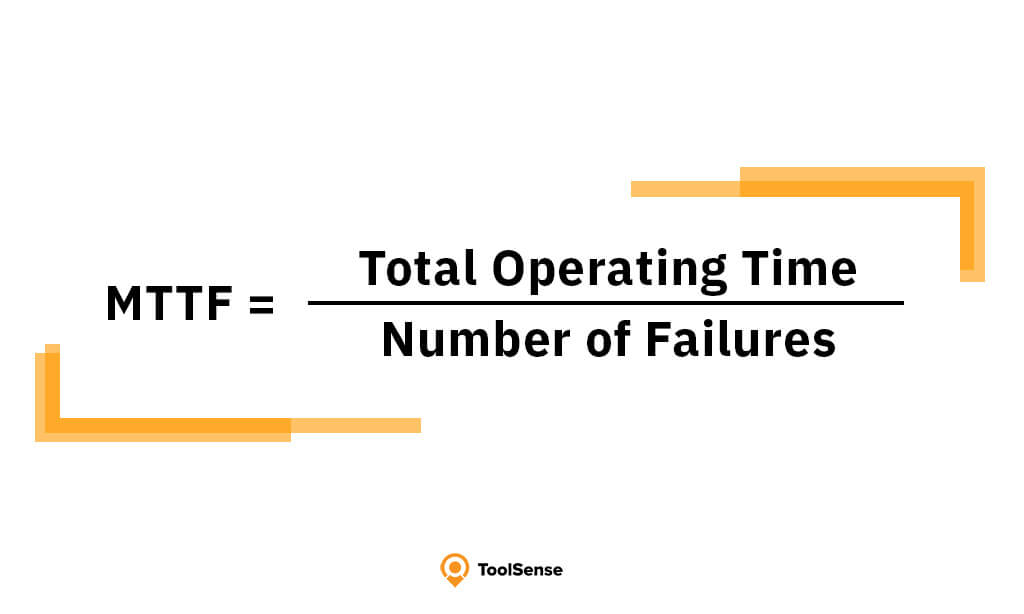
Divide the total operating time by the number of failures. The result is the average time before failure for one device. Use this simple formula:
MTTF = Total Operating Time ÷ Number of Failures
This value helps estimate the reliability of your devices over time.
Common Calculation Methods
Calculating Mean Time To Failure (MTTF) helps predict how long a product will last. Various methods exist to find MTTF. Each method suits different types of data and needs. Understanding these methods helps in choosing the right one for your analysis.
Using Historical Data
Historical data offers real-life records of product failures. Collect data on similar products and their failure times. Calculate the average time before failure occurs. This method is simple and uses actual performance data. It works best when enough past data is available.
Statistical Models
Statistical models estimate MTTF using probability and mathematics. Common models include exponential and Weibull distributions. These models fit failure data to predict lifespan. They handle data with varying failure rates well. Using models helps when data is limited or incomplete.
Software Tools
Software tools automate MTTF calculation using built-in algorithms. They process large datasets quickly and accurately. Many tools support data input from tests or field data. They also generate graphs and reports to visualize results. Software helps save time and reduces human error.
Avoiding Calculation Errors
Calculating Mean Time To Failure (MTTF) accurately is essential for reliable results. Errors in calculation can lead to wrong maintenance plans and increased costs. Avoiding these mistakes ensures better decision-making and product reliability.
Data Accuracy
Accurate data is the foundation of MTTF calculation. Collect failure times carefully and record all details. Incorrect or missing data leads to false MTTF values. Check data for consistency before starting calculations. Use precise measuring tools and methods.
Handling Censored Data
Censored data occurs when a product has not yet failed. Ignoring this data can skew MTTF results. Use statistical methods to include censored data properly. This approach improves the accuracy of life expectancy estimates. Always separate failed and censored units in your analysis.
Distinguishing Mttf From Mtbf
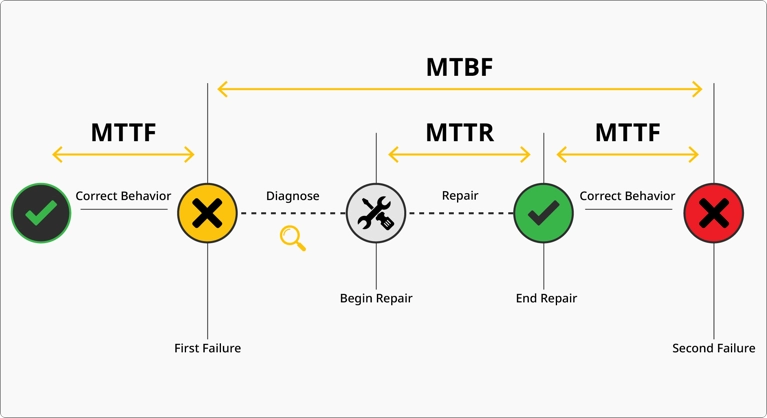
MTTF measures the average time until a non-repairable item fails. MTBF measures the time between failures for repairable items. Mixing these two metrics causes confusion and errors. Use MTTF only for non-repairable products. Choose MTBF for systems that can be fixed and reused.
Applications Of Mttf
Mean Time To Failure (MTTF) is a key metric used in many fields. It helps measure how long a product or system is expected to last before it fails. Understanding MTTF supports better decisions in design, maintenance, and warranty services. Below are some common applications of MTTF.
Product Design
Engineers use MTTF to build stronger products. It guides the choice of materials and components. Designers can predict weak points and improve durability. This reduces the chance of early failures. Using MTTF data leads to safer and more reliable products.
Maintenance Planning
MTTF helps plan maintenance schedules effectively. It shows when parts are likely to fail. Teams can replace or repair items before issues occur. This approach reduces unexpected downtime. It saves money and keeps systems running smoothly.
Warranty Analysis
Companies use MTTF to set warranty periods. It helps balance customer satisfaction and cost. Knowing average failure time prevents too many claims. It also ensures customers get fair protection. MTTF data supports clear and fair warranty policies.

Credit: coastapp.com
Credit: www.emaint.com
Frequently Asked Questions
What Does Mttf Mean In Reliability Engineering?
MTTF stands for Mean Time To Failure. It measures the average operational time before a non-repairable system fails. This metric helps predict product lifespan and improve reliability in engineering and manufacturing processes.
How Do You Calculate Mttf For Electronic Devices?
To calculate MTTF, divide total operational time of all devices by the number of failures. This average time indicates how long devices typically last before failing, aiding maintenance and design decisions.
Why Is Mttf Important For Product Design?
MTTF helps designers estimate product durability and reliability. It guides improvements to reduce failure rates and enhances customer satisfaction by ensuring longer-lasting products.
How Is Mttf Different From Mtbf?
MTTF applies to non-repairable items and shows average failure time. MTBF (Mean Time Between Failures) applies to repairable systems and measures average uptime between repairs.
Conclusion
Calculating MTTF helps predict how long a product lasts. It shows the average time before failure. This measure guides maintenance and improves reliability. Knowing MTTF saves money and avoids downtime. Keep tracking data and update your calculations. Simple steps lead to better decisions and results.
Understanding MTTF is key for product care and planning.
As an Amazon Associate, I earn from qualifying purchases.
