

Have you ever wondered how fresh the air in your room really is? Knowing how to calculate Air Changes Per Hour (ACH) can help you understand exactly that.
Whether you want to improve your home’s ventilation, ensure better air quality, or meet safety standards, this simple calculation puts the power in your hands. You’ll discover easy steps to figure out your ACH and why it matters for your health and comfort.
Keep reading—your lungs will thank you.
Credit: cleanair.camfil.us
What Is Air Changes Per Hour
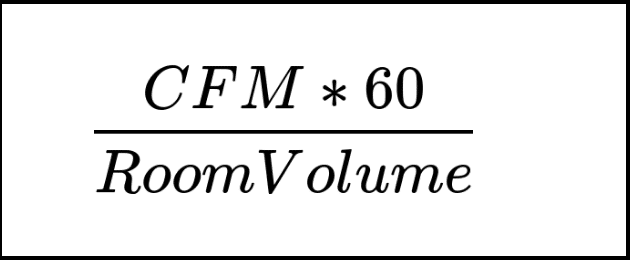
Air Changes Per Hour (ACH) measures how often the air in a room is replaced each hour. To calculate ACH, divide the airflow rate by the room’s volume. This helps keep indoor air fresh and healthy.
What Is Air Changes Per Hour?
Air Changes Per Hour (ACH) measures how many times the air in a space is replaced in one hour. It shows how well-ventilated a room or building is. Higher ACH means fresher air and better ventilation.
This measure helps control indoor air quality and reduce pollutants. It is crucial for homes, offices, and industrial spaces. Proper ACH improves comfort and health by removing stale air.
Why Is Air Changes Per Hour Important?
Good ventilation keeps air clean and safe to breathe. It lowers moisture, odors, and harmful gases inside. Proper ACH helps stop mold growth and reduces allergy risks.
In places like hospitals or labs, correct ACH protects workers and patients. It also helps save energy by balancing fresh air with heating or cooling needs.
How Is Air Changes Per Hour Used?
Engineers and builders use ACH to design ventilation systems. They match the ACH to the building type and its use. For example, kitchens need more air changes than offices.
Building codes often require minimum ACH levels. Meeting these rules ensures health and safety standards are met. ACH also guides upgrades to improve old ventilation systems.

Credit: www.youtube.com
Why Air Changes Matter
Air changes per hour (ACH) show how often the air inside a room is replaced. This number is key for healthy indoor air. Clean air helps remove dust, allergens, and germs. It also controls moisture and odors.
Good air exchange keeps people safe and comfortable. It lowers the risk of breathing problems and illness. Proper ventilation can reduce mold and other harmful pollutants. This is important in homes, offices, and schools.
Improves Indoor Air Quality
Higher air changes bring fresh air inside. This reduces stale air and pollution. Fresh air helps prevent headaches and tiredness. It also keeps the space feeling clean and fresh.
Controls Humidity And Moisture
Proper air changes stop moisture build-up. Moist rooms can cause mold and damage. Controlling humidity protects walls and furniture. It also helps prevent health issues like allergies.
Reduces Spread Of Illness
Good ventilation lowers airborne germs and viruses. More air changes mean fewer germs in the air. This helps reduce sickness in crowded places. It keeps schools and workplaces safer for everyone.
Tools Needed For Calculation
Calculating Air Changes Per Hour (ACH) requires some basic tools. These tools help measure room size and airflow accurately. Accurate measurements ensure reliable ACH results. Below are the key tools needed for the calculation.
Measuring Tape Or Laser Measure
A measuring tape or laser measure finds the room’s length, width, and height. These dimensions are necessary to calculate the room’s volume in cubic feet or meters. Choose a tool that is easy to use and precise.
Anemometer
An anemometer measures the speed of air moving through vents or ducts. It shows how much air flows into or out of the room. This tool is vital to find the airflow rate for ACH calculation.
Calculator Or Spreadsheet Software
A calculator or spreadsheet software helps perform the ACH formula. It simplifies multiplying and dividing numbers. This reduces errors and speeds up the calculation process.
Ventilation System Specifications
Check the ventilation system’s data for airflow rates. Manufacturers often provide air volume in cubic feet per minute (CFM). This information supports or verifies anemometer readings.
Measuring Room Volume
To calculate air changes per hour, first find the room volume by measuring length, width, and height. Then, divide the airflow rate by the room volume. This shows how many times the air in the room is replaced each hour.
Understanding The Importance Of Measuring Room Volume
Measuring room volume is key to calculating air changes per hour. It tells you how much air fits inside a space. Knowing this helps figure out how often air is replaced.
Accurate room volume measurement ensures correct ventilation estimates. This keeps indoor air fresh and healthy. It also helps save energy by avoiding over-ventilation.
How To Measure Room Length, Width, And Height
Start by measuring the room’s length. Use a tape measure and record the number in feet or meters.
Next, measure the width across the room. Make sure to measure from wall to wall.
Finally, measure the ceiling height. Measure from the floor straight up to the ceiling.
Calculating The Total Room Volume
Multiply the length by the width. Then multiply this result by the height.
The formula: Volume = Length × Width × Height.
The result is the room volume in cubic feet or cubic meters. This number is crucial for air change calculations.
Calculating Airflow Rate
Calculating airflow rate is key to finding out air changes per hour. It shows how much air moves through a space in one hour. This helps keep indoor air fresh and healthy. There are different ways to measure airflow rate. Some use technology, while others use simple tools.
Using Ventilation Systems
Many buildings have ventilation systems with airflow data. These systems often show how much air they move. You can check the system’s specifications or display. This gives a quick estimate of airflow rate. Some systems let you adjust airflow manually. This helps control air changes per hour easily.
Mechanical fans and HVAC units also provide airflow rates. Look for labels or manuals for exact numbers. This method is fast and accurate for many rooms.
Manual Measurement Techniques
Manual techniques work well without special systems. Use tools like an anemometer to measure air speed. Measure air speed at vents or openings. Multiply air speed by vent area to get airflow rate. This method needs careful measurement for best results.
Another way is using the tracer gas method. It tracks how fast air moves in a room. This method takes more time but is very precise. Manual methods fit well in homes and small offices.
Step-by-step Calculation
Calculating Air Changes Per Hour (ACH) helps understand how often air is replaced in a room. This step-by-step guide shows how to do it easily. Follow each part carefully to get accurate results.
Gathering Data
First, measure the room’s length, width, and height. Multiply these to find the room’s volume in cubic feet. Next, find the airflow rate of your ventilation system in cubic feet per minute (CFM). You can get this from the device manual or a professional measurement.
Applying The Formula
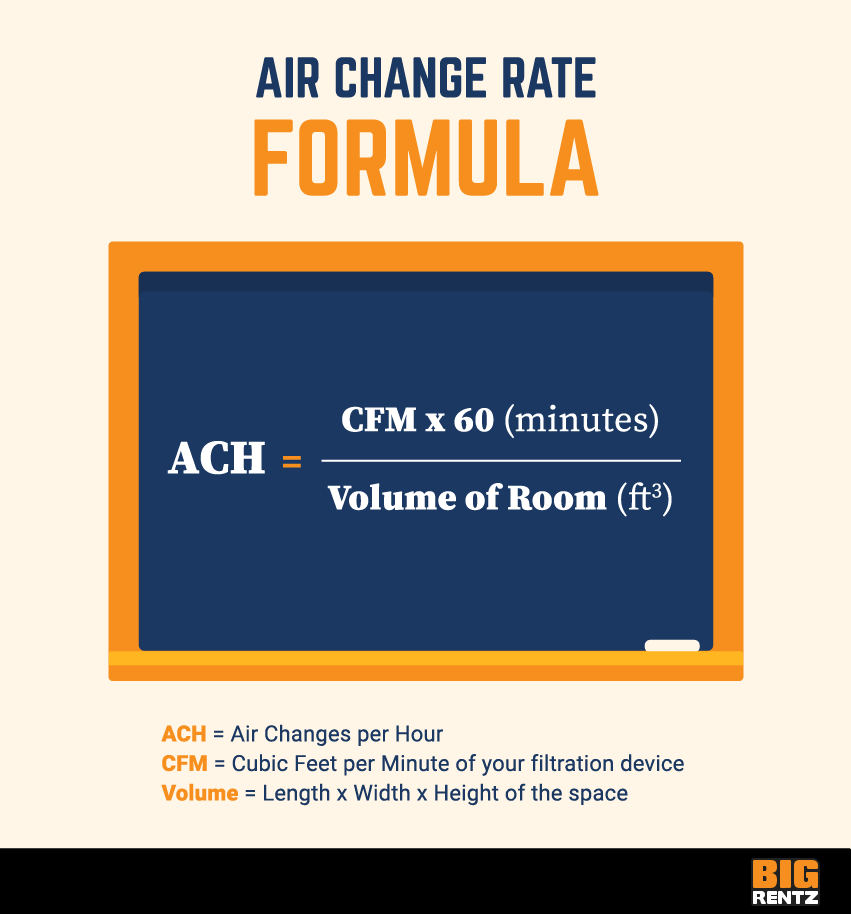
Use this simple formula: ACH = (CFM × 60) ÷ Room Volume. Multiply the airflow rate by 60 to convert minutes into hours. Then, divide by the room volume. This gives the number of air changes per hour.
Interpreting Results
A higher ACH means fresher air more often. Low ACH may cause stuffy air or poor ventilation. Compare your result with recommended ACH values for your space type. Adjust ventilation if needed to improve air quality.
Common Mistakes To Avoid
Calculating Air Changes Per Hour (ACH) can seem simple. Many make mistakes that affect accuracy. Avoiding these errors ensures proper ventilation assessment. Clear calculations help maintain good air quality and comfort.
Using Incorrect Room Dimensions
Many measure room size wrongly. They forget to measure length, width, and height. Using wrong numbers leads to wrong volume. Always measure carefully and double-check the room size.
Ignoring Ventilation System Flow Rates
Some use old or estimated airflow rates. Airflow can change over time or with filters. Use current, tested flow rates from your ventilation system. This improves ACH accuracy.
Not Accounting For Multiple Air Sources
Some count only one vent or fan. Rooms often have more than one air source. Add airflow from all vents for the total air change. This gives a true ACH value.
Confusing Air Changes Per Hour With Air Exchange Rate
People often mix ACH with different metrics. ACH is air volume replaced per hour. Air exchange rate can mean other things. Keep terms clear to avoid calculation errors.
Skipping Unit Conversion Steps
Calculations require consistent units. Some forget to convert cubic feet to cubic meters or minutes to hours. Check units carefully before final calculations. This avoids big mistakes.
Improving Air Change Accuracy
Improving air change accuracy helps ensure better indoor air quality. Precise calculations lead to efficient ventilation and energy use. Simple steps can make your air change rate more reliable.
Measure Room Dimensions Carefully
Start by measuring the room’s length, width, and height. Use a tape measure for accuracy. Multiply these numbers to find the room’s volume in cubic feet or meters. Accurate room size is key to correct air change rates.
Use Accurate Airflow Measurement Tools
Choose tools like an anemometer or a flow hood. These devices measure the air moving through vents. Check that your tool is calibrated and in good condition. Accurate airflow data improves air change calculations.
Calculate Ventilation Rate Correctly
Measure airflow in cubic feet per minute (CFM) or cubic meters per hour (m³/h). Divide this by the room volume. Multiply by 60 to get air changes per hour (ACH). Follow this formula for precise results.
Account For Vent Location And Obstacles
Note where vents are placed in the room. Walls or furniture can block airflow. This affects the real air change rate. Adjust your calculations if airflow is restricted.
Repeat Measurements At Different Times
Airflow changes with time and weather. Take several readings during the day. Use the average to improve accuracy. This helps capture true ventilation performance.
Air Changes And Indoor Air Quality
Air changes per hour (ACH) measure how many times the air inside a room is replaced. This number helps understand how fresh the indoor air is. Fresh air removes pollutants and helps prevent health problems.
Good indoor air quality depends on enough air changes. Low air change rates can cause stale air and build up of harmful gases. High air change rates bring in more oxygen and remove carbon dioxide and allergens.
What Are Air Changes Per Hour?
Air changes per hour show how often the air inside a space is fully replaced. It helps know if ventilation is enough to keep air clean. The higher the ACH, the fresher the air.
Why Air Changes Matter For Health
Proper air changes reduce dust, mold, and bacteria in the air. This helps lower asthma and allergy risks. Good ventilation also reduces the chance of airborne diseases.
How To Improve Indoor Air Quality
Increase air changes by opening windows or using fans. Use air purifiers to remove pollutants. Regularly clean vents and filters to keep air moving well.
Credit: www.bigrentz.com
Frequently Asked Questions
What Is Air Changes Per Hour (ach)?
Air changes per hour (ACH) measures how many times the air inside a room is replaced in one hour. It helps assess ventilation efficiency and indoor air quality.
How Do I Calculate Ach For A Room?
To calculate ACH, divide the airflow rate (CFM) by the room volume (cubic feet) and multiply by 60. This gives you the number of air changes per hour.
Why Is Ach Important For Indoor Air Quality?
ACH ensures proper ventilation, reducing pollutants and moisture. Higher ACH improves air freshness, lowers airborne contaminants, and promotes healthier indoor environments.
What Tools Help Measure Airflow For Ach Calculation?
Anemometers and airflow meters accurately measure the cubic feet per minute (CFM) of air moving through vents. These readings are essential for precise ACH calculation.
Conclusion
Calculating air changes per hour helps keep indoor air fresh and healthy. It shows how often air is replaced in a room. Knowing this helps improve ventilation and comfort. Use simple tools and formulas to find the right value. Regular checks ensure your space stays safe and clean.
Good air quality supports better health and focus. Keep this calculation in mind for any building or room. It’s a small step with big benefits.
As an Amazon Associate, I earn from qualifying purchases.
