
Have you ever wondered how your chess rating really works? Whether you’re just starting out or have played dozens of games, understanding how chess ratings are calculated can give you a clearer picture of your progress.
It’s not just about winning or losing—it’s about how each move, each match, shifts your ranking. You’ll discover the simple math behind the numbers, why some wins boost your rating more than others, and how you can use this knowledge to improve faster.
Keep reading to unlock the secrets behind your chess rating and take control of your game’s growth.
Chess Rating Systems
Chess ratings show how strong a player is. Different systems calculate these ratings. Each system uses its own method to update scores after matches. Understanding these helps players track their progress and compare skill levels.
Elo Rating Basics
The Elo system is the most common rating method. It gives each player a number based on game results. Winning against a strong player raises your rating more. Losing to a weaker player lowers your rating more. The system uses math to predict expected results. Ratings change after each game to reflect true skill.
Other Popular Systems
Some groups use different methods than Elo. The Glicko system adds a rating confidence value. This value shows how sure the system is about the rating. The US Chess Federation uses a modified system with quick updates. Chess.com has its own rating for online play. Each system fits different needs but aims to rank players fairly.
Calculation Process
Chess ratings reflect a player’s skill and performance over time. The calculation process updates these ratings after each game. It uses a formula to adjust scores based on who won and who played. This system keeps ratings fair and accurate.
Pre-game Rating
Before the match starts, each player has a set rating. This number shows their current skill level. The rating is based on past games and results. It acts as a starting point for the calculation.
Expected Score
The expected score predicts how likely a player is to win. It compares the two players’ ratings. A higher-rated player is more likely to win. The formula gives a number between 0 and 1. This number shows the chance of winning or drawing.
Post-game Adjustment
After the game, the actual result is recorded. The system compares it to the expected score. If a player does better than expected, their rating goes up. If worse, the rating goes down. The change depends on the difference between the result and the expectation. This keeps the rating accurate and fair.
Factors Affecting Ratings
Chess ratings change after each game. Several factors affect these changes. Understanding these factors helps players know how their ratings rise or fall.
Opponent Strength
The strength of the opponent plays a big role. Beating a strong player raises your rating more. Losing to a weaker player lowers your rating more. The system compares both players’ ratings before updating scores.
Game Outcome
The result of the game is crucial. Winning increases your rating. Losing decreases it. A draw changes the rating slightly, depending on the opponent’s strength. The system values wins and losses differently.
K-factor Importance
The K-factor controls how much ratings change. New players have a higher K-factor, so ratings change faster. Experienced players have a lower K-factor, making changes slower. This keeps ratings stable over time.

Credit: www.sparkchess.com
Rating Floors And Ceilings
Rating floors and ceilings help keep chess ratings fair and balanced. They set limits on how low or high a player’s rating can go. This prevents sudden large drops or jumps in ratings. It also helps new players build their ratings steadily. Understanding these limits clarifies how ratings change over time.
What Is A Rating Floor?
A rating floor is the lowest rating a player can have. It stops the rating from dropping too far. New players usually start at or above this floor. The floor helps protect a player’s rating after a few bad games. It keeps ratings from falling below a certain level.
What Is A Rating Ceiling?
A rating ceiling is the highest rating a player can reach in some systems. It limits the maximum rating a player can get quickly. This helps maintain balance in the rating pool. Ceilings prevent unrealistic rating spikes in a short time. They encourage steady improvement over time.
Why Floors And Ceilings Matter
Floors and ceilings keep the rating system stable. They reduce big rating swings after few games. This makes ratings more reliable and fair. Players can see their true skill level over time. The system rewards consistent performance, not luck.
Provisional Ratings Explained
Provisional ratings show a player’s skill before many games are played. They change quickly as more results come in. This helps match players fairly early on.
What Is A Provisional Rating?
A provisional rating is a temporary score given to new chess players. It shows their skill level before their rating becomes stable. This rating helps place players in the right competition groups early on.
How Is A Provisional Rating Calculated?
The system calculates provisional ratings differently from regular ones. It uses the results of the first few games only. Each game has a big impact on the rating, making it change quickly.
Why Are Provisional Ratings Important?
Provisional ratings give a quick estimate of a player’s strength. They guide tournament organizers to match players fairly. This prevents beginners from facing very strong opponents too soon.
When Does A Rating Stop Being Provisional?
A rating stops being provisional after a set number of games. Usually, this is around 20 games. After that, the rating changes slower and reflects true skill better.
Common Misconceptions
Many think chess ratings change only by winning or losing. Actually, the system also considers your opponent’s rating and game results. Ratings adjust after each match, reflecting true skill over time.
Common Misconceptions About Chess Ratings
Many players have wrong ideas about how chess ratings work. These ideas cause confusion and frustration. Understanding the truth helps players improve and enjoy the game more.
Chess ratings are not just numbers that go up or down randomly. They follow specific rules based on each game’s outcome and the opponent’s rating. Clearing up common myths makes the system easier to trust.
Chess Ratings Always Increase With Wins
Winning does not always raise your rating. The change depends on your opponent’s rating. Beating a lower-rated player might lower your rating. Losing to a higher-rated player can still increase your rating.
Ratings Reflect Skill Perfectly
Ratings show skill level but are not perfect. Many factors affect ratings, like the number of games played and opponents faced. New players’ ratings can change quickly, while experienced players’ ratings change slowly.
Ratings Are The Same Across All Platforms
Each chess platform has its own rating system. Ratings on one site may not match ratings on another. This happens because of different calculation methods and player pools.
Rapid Rating Is The Same As Classical Rating
Rapid and classical ratings are separate. You can have different ratings for different game speeds. Playing well in one format does not guarantee the same rating in another.
Impact On Player Strategy
Chess ratings shape how players plan and play. A player’s rating changes after each match. This change depends on the opponent’s rating and match outcome. Players often adjust their strategies to protect or improve their rating. The rating system influences both risk choices and who players choose to face.
Risk Taking
Players with high ratings may avoid risky moves. Losing can drop their rating significantly. Lower-rated players might take more risks to win. A risky move can lead to a big gain or a big loss. Players balance risk and reward based on their current rating.
Opponent Selection
Choosing an opponent matters for rating changes. Beating higher-rated players increases ratings more. Losing to lower-rated players causes a bigger rating drop. Some players prefer safe matches to keep their rating steady. Others seek tougher opponents to improve faster.
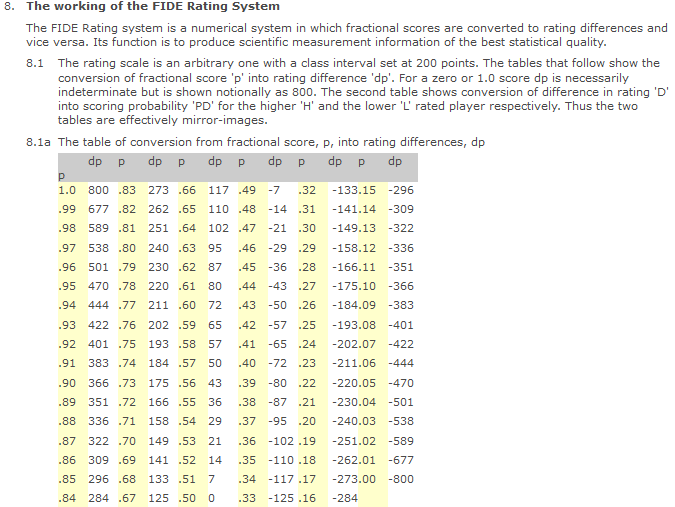
Credit: chess.stackexchange.com
Online Vs Over-the-board Ratings
Chess ratings measure your skill level. They help compare players worldwide. Two main types exist: online ratings and over-the-board (OTB) ratings. These ratings differ in how they are calculated and what they represent.
Online ratings come from playing chess on websites and apps. OTB ratings come from official tournaments in person. Understanding these differences helps players see where they stand.
Online Ratings Calculation
Online ratings update after every game. The system quickly adjusts to wins and losses. Different platforms use their own rating formulas. Most use a version of the Elo or Glicko system. These systems consider player strength and game outcomes.
Online games often happen fast. Blitz and rapid games affect ratings differently. The rating changes reflect quick decision-making skills. Some sites separate ratings by game type.
Over-the-board Ratings Calculation
OTB ratings come from official chess organizations. The most known is FIDE, the world chess body. OTB ratings update after rated tournaments. These ratings use a strict calculation method.
OTB games are slower, allowing more thought. This impacts the rating accuracy. Players must follow tournament rules strictly. Ratings rise or fall based on performance against rated opponents.
Key Differences Between Online And Otb Ratings
Online ratings react faster to each game result. OTB ratings change after longer intervals. Online environments vary in player skill and fairness. OTB tournaments have strict controls and standards.
Online play can include more beginners and casual players. OTB events tend to have more serious competitors. Ratings reflect these conditions. Online ratings can vary widely between platforms. OTB ratings are more uniform worldwide.

Credit: www.youtube.com
Frequently Asked Questions
How Is A Chess Rating Initially Calculated?
A new player’s chess rating starts at a default value set by the rating system. This value adjusts after each game based on the opponent’s rating and the game outcome. Early wins against higher-rated players increase ratings quickly.
What Factors Influence Chess Rating Changes?
Chess ratings change based on game results and opponent ratings. Winning against stronger players increases your rating more. Losing to lower-rated players decreases it more. The system uses a mathematical formula to update ratings after every match.
How Does The Elo Rating System Work In Chess?
The Elo system calculates rating changes by comparing expected and actual game results. If you perform better than expected, your rating rises. If worse, it drops. The formula considers both players’ current ratings to determine the expected outcome.
Why Do Chess Ratings Fluctuate After Every Game?
Ratings fluctuate because each game provides new performance data. The system adjusts your rating to reflect current skill level. Frequent games cause more changes, while inactivity keeps your rating stable but possibly less accurate.
Conclusion
Chess ratings show how strong a player is compared to others. They change after every game you play. Winning against higher-rated players raises your rating more. Losing to lower-rated players lowers it more. The system helps match players fairly and tracks progress.
Understanding this helps players improve step by step. Keep playing, learning, and enjoying the game. Ratings are just numbers, but growth is real.
As an Amazon Associate, I earn from qualifying purchases.
