
Have you ever wondered how your Bluetooth speaker plays music without any wires? It’s more fascinating than you might think.
Understanding how Bluetooth speakers work can help you get the best sound experience and make smarter choices when buying one. You’ll discover the simple science behind the magic, how your devices connect, and why your music sounds so clear. Keep reading—you’ll be surprised at how easy it is to grasp and how it can improve your everyday listening.
Bluetooth Technology Basics
Bluetooth technology is the heart of wireless speakers. It allows devices to connect and share sound without cables. Understanding the basics helps you see how your speaker works with your phone or computer. The technology is simple but smart.
Wireless Communication Principles
Bluetooth uses radio waves to send data over short distances. It works on a frequency of 2.4 GHz, common in many wireless devices. The signal travels between paired devices, like a phone and a speaker. This pairing creates a secure connection. Data moves in small packets, which the speaker decodes into sound. The connection stays active as long as devices are close, usually within 30 feet. This method saves power and avoids interference.
Bluetooth Versions And Compatibility
Bluetooth has different versions, each improving speed and range. Older versions use more power and have slower data rates. Newer versions, like Bluetooth 5.0, offer better sound quality and longer range. Devices must support compatible versions to work well together. Most modern speakers and phones support recent Bluetooth versions. This ensures a stable connection and clear audio. Always check your device’s Bluetooth version for best results.
Core Components Inside Bluetooth Speakers
Bluetooth speakers have several key parts inside. These parts work together to deliver wireless sound. Understanding these components helps explain how Bluetooth speakers produce music without cables.
Transmitter And Receiver Modules
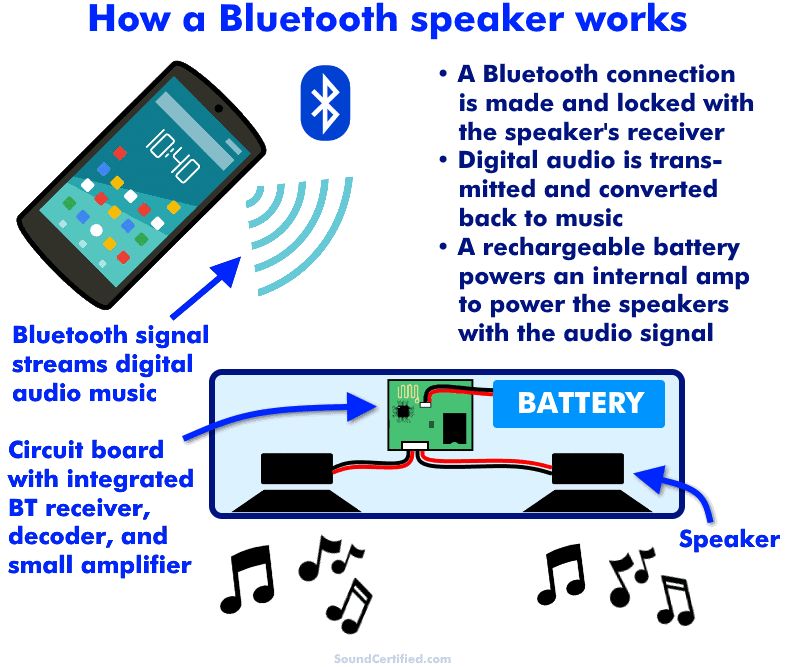
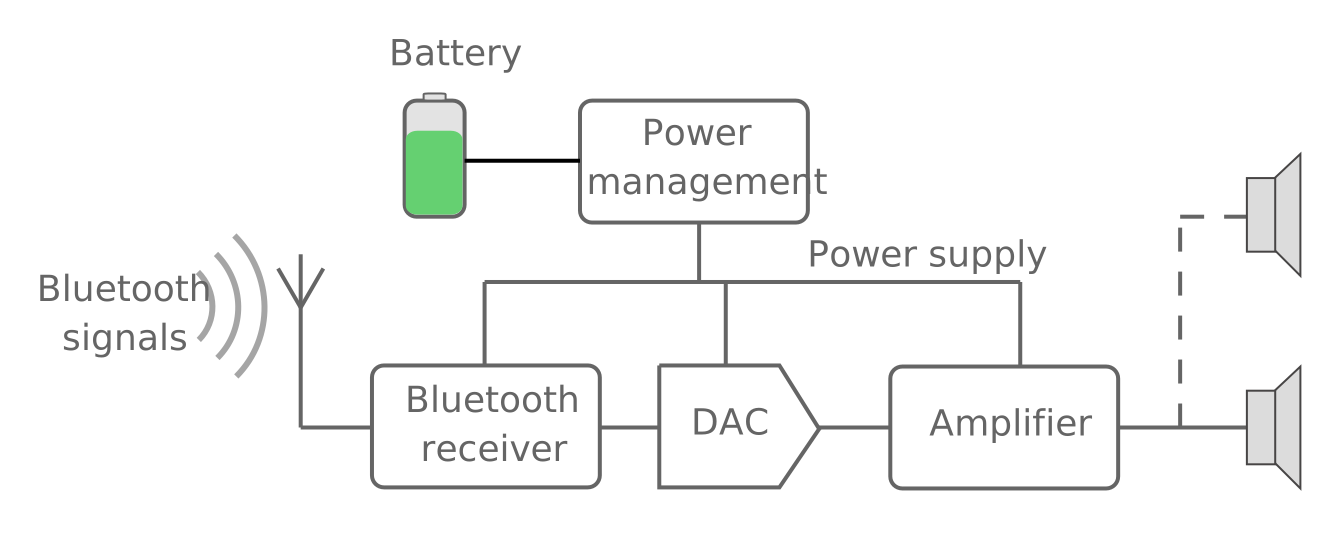
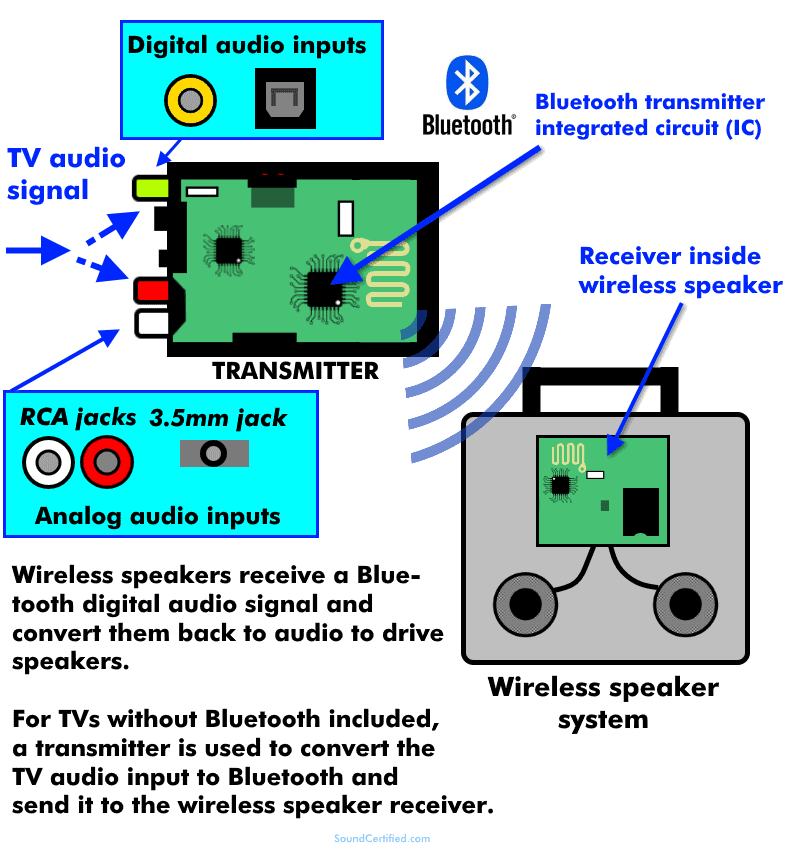
The transmitter sends audio signals from your phone or device. The receiver in the speaker picks up these signals. They use Bluetooth technology to connect wirelessly. This process allows music to travel through the air. It removes the need for wires and cables.
Amplifier And Speaker Drivers
The amplifier makes the audio signal stronger. It boosts the sound so it can fill a room. The speaker drivers then turn electrical signals into sound waves. These drivers are tiny speakers inside the device. They create the music you hear from the speaker.
Power Source And Battery
Bluetooth speakers need power to work. Most have a built-in battery for portability. The battery stores energy to play music on the go. Some speakers use rechargeable batteries charged with USB cables. The power source keeps the speaker running for hours.
Signal Transmission Process
The signal transmission process is how Bluetooth speakers receive and play sound. It involves several steps that turn music from your phone or device into clear audio. This process happens fast and smoothly to give you good sound quality.
Audio Signal Encoding
The first step is audio signal encoding. Your device converts the music into a digital format. This means the sound is changed into tiny pieces of data called bits. These bits make it easier to send the sound through Bluetooth.
Data Packet Transfer
Next, the encoded data is broken into packets. These packets travel wirelessly from your device to the speaker. Bluetooth uses radio waves to send these packets over short distances. The speaker receives the packets one by one.
Signal Decoding And Playback
Finally, the speaker decodes the data packets back into sound. It changes the digital bits into electrical signals. These signals move to the speaker’s drivers, which produce the sound you hear. This step makes the music come alive.
Credit: soundcertified.com
Audio Quality Factors
Audio quality matters most when using Bluetooth speakers. Many factors affect how clear and rich the sound is. These factors work together to create the listening experience. Understanding them helps choose the right speaker for your needs.
Codec Types And Their Impact
Codecs control how audio data transfers over Bluetooth. Some codecs compress sound more than others. Less compression means better sound quality. Common codecs include SBC, AAC, aptX, and LDAC. Higher-quality codecs keep music clearer and more detailed. Devices must support the same codec for best results.
Speaker Design And Materials
The size and shape of a speaker change its sound. Good speakers use strong materials to reduce vibrations. Better cones and enclosures produce richer bass and clearer highs. Small speakers may lack deep bass. Larger ones often deliver fuller sound. Quality parts make a big difference in audio performance.
Interference And Range Limitations
Bluetooth signals can weaken with distance or obstacles. Walls, furniture, and other electronics cause interference. Signal drops lower sound quality or cause pauses. Staying close to the speaker helps maintain clear sound. Some speakers use technology to reduce interference. Still, range limits affect how well audio plays.
Additional Features Enhancing User Experience
Bluetooth speakers do more than just play sound. They come with features that make listening better and easier. These extra features improve how users enjoy music and other audio. They help create clear sound, connect multiple speakers, and keep the music going longer.
Noise Cancellation And Equalizers
Noise cancellation reduces background sounds. It helps you hear music clearly in noisy places. Equalizers let you adjust bass, treble, and midrange tones. This customization makes sound suit your taste. Together, these features provide a cleaner and richer sound experience.
Multi-speaker Pairing
Multi-speaker pairing lets you link two or more speakers. They play the same music at once. This feature creates a wider sound space. It is perfect for parties or outdoor events. You get louder and more immersive audio without extra wires.
Battery Life And Charging Technologies
Long battery life keeps music playing for hours. Fast charging helps speakers get ready quickly. Some speakers use USB-C for faster, safer power. Others support wireless charging for convenience. These technologies reduce downtime and keep the music flowing.
Credit: www.electronics-notes.com
Future Trends In Bluetooth Speaker Technology
The future of Bluetooth speakers is bright and full of new possibilities. Technology keeps moving forward. Bluetooth speakers will become smarter, last longer, and sound better. Users will enjoy better control and more features. This section explores key trends shaping this future.
Advancements In Bluetooth Standards
Bluetooth standards are improving every year. New versions offer faster speeds and better connections. They use less power, which saves battery life. Higher quality audio can be sent wirelessly now. This means clearer sound and less delay. Devices will connect more easily and stay connected longer.
Smart Integration And Voice Control
Bluetooth speakers will work better with smart home devices. Voice assistants like Alexa and Google will be built in. You can control music with simple voice commands. This makes using speakers easier and hands-free. Speakers will also respond to other smart devices in your home. A more connected experience is coming.
Improved Battery And Sound Performance
Battery life will keep getting longer and faster to charge. New battery technology helps speakers play music for many hours. Sound quality will improve with better drivers and software. Speakers will deliver richer bass and clearer highs. Portability and power will no longer be a trade-off.
Credit: kdfoundation.org
Frequently Asked Questions
How Do Bluetooth Speakers Connect To Devices?
Bluetooth speakers connect wirelessly via Bluetooth technology. They pair with smartphones, tablets, or computers to stream audio without cables.
What Powers Bluetooth Speakers For Wireless Use?
Bluetooth speakers use built-in rechargeable batteries. These batteries allow portable use without needing a constant power source.
How Is Sound Transmitted In Bluetooth Speakers?
Audio signals are sent as digital data via Bluetooth. The speaker decodes this data and converts it into sound waves.
Can Bluetooth Speakers Connect To Multiple Devices?
Some Bluetooth speakers support multi-device pairing. This feature allows easy switching or simultaneous connection to different devices.
Conclusion
Bluetooth speakers send sound wirelessly from your device. They use radio waves to connect and play music. Inside, tiny parts change signals into sound you hear. Batteries power them, making them portable and handy. Knowing how they work helps you choose the right one.
Enjoy music anywhere without tangled wires. Simple technology, big convenience.
As an Amazon Associate, I earn from qualifying purchases.

