
Have you ever wondered what happens inside your laser printer each time you hit “print”? Understanding how laser printers work can save you time, money, and frustration.
Imagine knowing exactly why your prints come out so sharp and how your printer quickly turns digital files into crisp pages. This article will reveal the simple steps behind the magic, making you feel confident the next time you use your printer.
Keep reading—you’ll discover secrets that can improve your printing experience right away.
Laser Printer Basics
Laser printers are common in offices and homes. They offer fast, clear printing. Understanding the basics helps you see why they are so popular. This section breaks down how laser printers work in simple terms.
Key Components
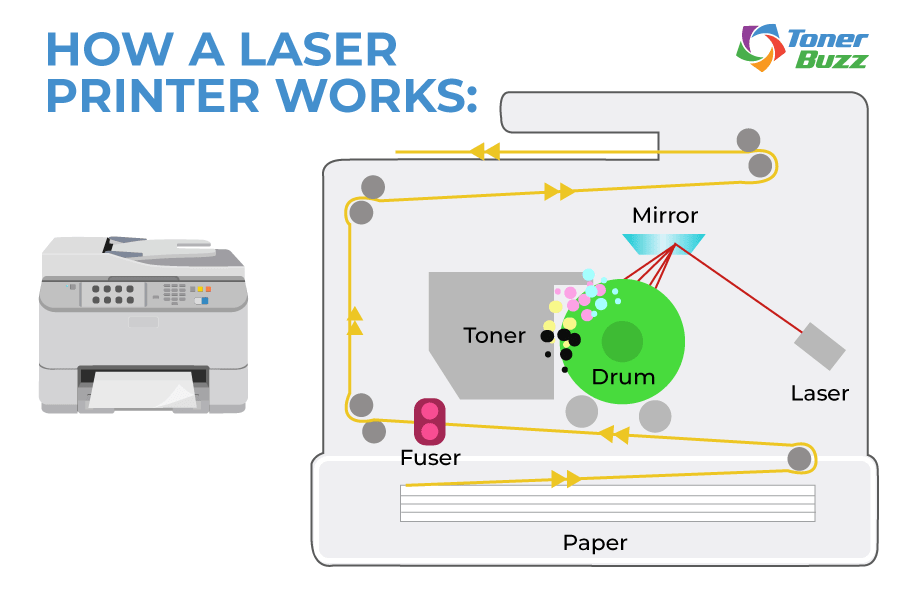
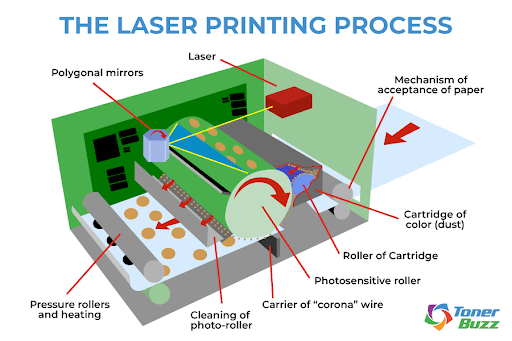
Laser printers have several important parts. The drum unit is a cylinder that holds an image of the page. The laser beam writes the image on the drum. Toner is a fine powder that sticks to the drum’s image. The paper moves through the printer and picks up toner. A fuser melts the toner onto the paper to make the print permanent. These parts work together to create sharp text and images.
Printing Process Overview
The printing starts when the laser hits the drum. It draws the page image using static electricity. The toner powder sticks to the charged parts of the drum. Paper feeds into the printer and rolls over the drum. Toner transfers from the drum to the paper. The fuser heats and presses the toner to fix it. The paper exits the printer with the finished print. This process is fast and repeats for each page.
Credit: www.tonerbuzz.com
Role Of The Drum
The drum is a key part inside a laser printer. It helps create the image on paper. The drum is a cylinder coated with a special material. This material reacts to light and electricity. It carries the image of what you want to print. The drum works closely with other parts like the laser and toner. It changes its electric charge to hold the toner. This process is what makes laser printing fast and clear.
Charging The Drum
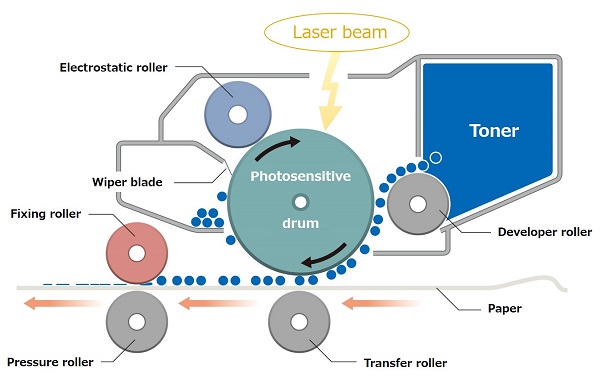
The drum starts with a uniform electric charge. A wire or roller applies this charge. It covers the drum evenly. This charged surface is ready to receive the laser image. The charge helps attract toner particles later. Without this step, the toner would not stick properly.
Laser Beam Exposure
The laser shines on the drum to create the image. It removes the electric charge in certain spots. These spots match the text or pictures to print. The laser “draws” the image by changing charge areas. Toner sticks only to the charged parts of the drum. This selective charging forms the exact print pattern.
Toner Application
The toner application is a key step in how laser printers create sharp images and text. After the laser draws the image on the drum, toner powder sticks to the charged areas. This powder forms the visible print on paper.
Understanding how toner works helps explain why laser prints look so clear and last long. The process involves precise powder composition and a careful transfer to paper.
Toner Composition
Toner is a fine powder made from plastic particles and color pigments. The plastic melts during printing to bond the image to paper. Pigments give the toner its color, usually black or color shades.
The powder is very light and sticky. This helps it cling only to the charged parts of the drum. The size and shape of toner particles affect print quality.
Transferring Toner To Paper
After toner sticks to the drum, it moves to the paper surface. The paper gets a positive charge that pulls the toner from the drum. This step ensures toner transfers only to the right spots.
The paper passes through heated rollers next. Heat melts the plastic in the toner, fusing it to the paper fibers. This process is called fusing and makes the print durable.
Fusing The Image
Fusing the image is the final step in laser printing. This process makes the toner stick to the paper permanently. Without fusing, the toner would just rub off. The printer uses heat and pressure to melt the toner particles. This action binds the toner to the paper fibers. The result is a clear, sharp print that lasts.
Heat And Pressure Mechanism
The fuser unit contains a heated roller and a pressure roller. The heated roller reaches high temperatures quickly. It melts the toner powder on the paper surface. The pressure roller presses the paper against the heated roller. This pressure helps the melted toner soak into the paper. The combination of heat and pressure ensures strong adhesion.
Permanent Fixing Of Toner
Once melted, the toner cools and solidifies on the paper. This step locks the toner in place. The print becomes durable and smudge-resistant. The toner changes from a loose powder to a solid layer. This layer stays fixed even after handling or exposure to light. Fusing completes the printing process by sealing the image.
Advantages Of Laser Printing
Laser printers offer many benefits that make them popular for homes and offices. They provide fast, clear, and reliable printing. These advantages help save time and reduce printing costs. Understanding these benefits helps you choose the right printer for your needs.
Speed And Efficiency
Laser printers print pages much faster than inkjet printers. They use a laser beam to quickly create images on the drum. This process allows high-speed printing of many pages. Businesses with heavy printing needs prefer laser printers for this reason. The fast output helps complete tasks on time.
These printers also handle large print jobs without slowing down. The toner used in laser printers dries instantly, avoiding smudges. This efficiency means less waiting and fewer errors during printing.
Print Quality
Laser printers produce sharp and clear text. The laser creates precise dots on the paper, making letters easy to read. This quality is perfect for professional documents and reports. The images also come out clean with smooth edges.
Laser printers maintain consistent quality over many pages. They do not bleed or blur like some inkjet prints. This makes them ideal for printing large volumes of important documents. The crisp output improves the overall appearance of your work.
Credit: www.printerbase.co.uk
Common Issues And Maintenance
Laser printers are reliable, but they need care to work well. Common problems can affect print quality and speed. Regular maintenance helps avoid many issues. Simple fixes keep your printer running smoothly and your documents clear.
Toner Smudges And Streaks
Toner smudges appear when the toner does not stick properly. Streaks can happen from dirty rollers or a worn drum. These problems make prints look messy and hard to read. Check the toner cartridge for leaks or damage. Replace it if toner spills inside the printer. Also, clean the rollers gently with a soft cloth. This removes dust and old toner that cause streaks.
Cleaning And Replacing Parts
Regular cleaning keeps parts working well. Use a lint-free cloth to wipe inside the printer. Avoid touching the drum with bare hands. Oil from skin can damage it. Replace parts like the drum unit and rollers after heavy use. Follow the printer’s guide for replacement steps. Keep the printer in a dust-free area. This reduces the need for frequent cleaning.
Credit: www.tonerbuzz.com
Frequently Asked Questions
How Does A Laser Printer Create Images On Paper?
A laser printer uses a laser beam to draw an image on a drum. The drum attracts toner particles, which transfer onto paper. Heat fuses the toner, creating sharp, permanent images quickly and efficiently.
Why Are Laser Printers Faster Than Inkjet Printers?
Laser printers use a laser to print entire pages at once. Inkjet printers spray ink line by line. This allows laser printers to produce high-quality prints much faster, especially for large volumes.
What Role Does Toner Play In Laser Printing?
Toner is a fine powder that forms the printed image. The laser charges the drum, attracting toner particles in specific areas. The toner is then fused onto paper using heat, creating durable prints.
Are Laser Printers Cost-effective For Home Use?
Laser printers have higher upfront costs but lower per-page costs. They are ideal for high-volume printing due to faster speeds and efficient toner use. For occasional use, inkjets might be cheaper initially.
Conclusion
Laser printers use light to create sharp images on paper. They work fast and print clear text and pictures. Inside, a laser draws the image on a drum that holds toner. The toner sticks to the paper with heat and pressure.
This process makes laser printing reliable and efficient. Understanding how they work helps you choose the right printer. Now, you know the basics behind laser printing technology. It’s a smart choice for home and office use. Simple, quick, and effective printing every time.
As an Amazon Associate, I earn from qualifying purchases.
