
Are you working with logs and need to figure out how much usable wood you have? Knowing how to calculate board feet in a log is key to getting the right amount of lumber for your project and avoiding costly mistakes.
But if numbers and measurements aren’t your thing, this process can feel confusing. Don’t worry—this guide breaks it down step-by-step, so you can easily measure and understand your wood’s value. By the end, you’ll have the confidence to calculate board feet like a pro and make smarter decisions for your woodworking or building projects.
Keep reading to unlock this essential skill!
Credit: dqydj.com
What Is Board Foot
Understanding the term “board foot” is key to measuring lumber correctly. This unit helps people know how much wood they have or need. It is a simple way to describe wood volume in the lumber business.
Basic Definition
A board foot is a unit of wood volume. It measures a piece of lumber that is 12 inches long, 12 inches wide, and 1 inch thick. This size equals one board foot. The term helps compare different sizes of wood easily.
Importance In Lumber Measurement
Board feet are essential for buying or selling lumber. They show the amount of wood in a clear way. This unit helps avoid confusion about wood size. Builders and woodworkers use it to plan their projects and costs accurately.
Tools Needed For Measurement
Calculating board feet in a log requires a few simple tools. Each tool helps measure or calculate the volume accurately. Using the right tools saves time and reduces errors. Here are the main tools needed for measurement.
Measuring Tape
A measuring tape is essential for getting the log’s dimensions. Measure the length and diameter carefully. Choose a tape that is long enough and easy to read. Always measure at the widest part of the log. This gives the most accurate size for calculation.
Calculator
A calculator helps convert measurements into board feet quickly. Use it to multiply and divide numbers without mistakes. It is especially useful for complex formulas. A simple calculator or a calculator app on your phone works well. This tool speeds up the process and avoids manual errors.
Log Scale Charts
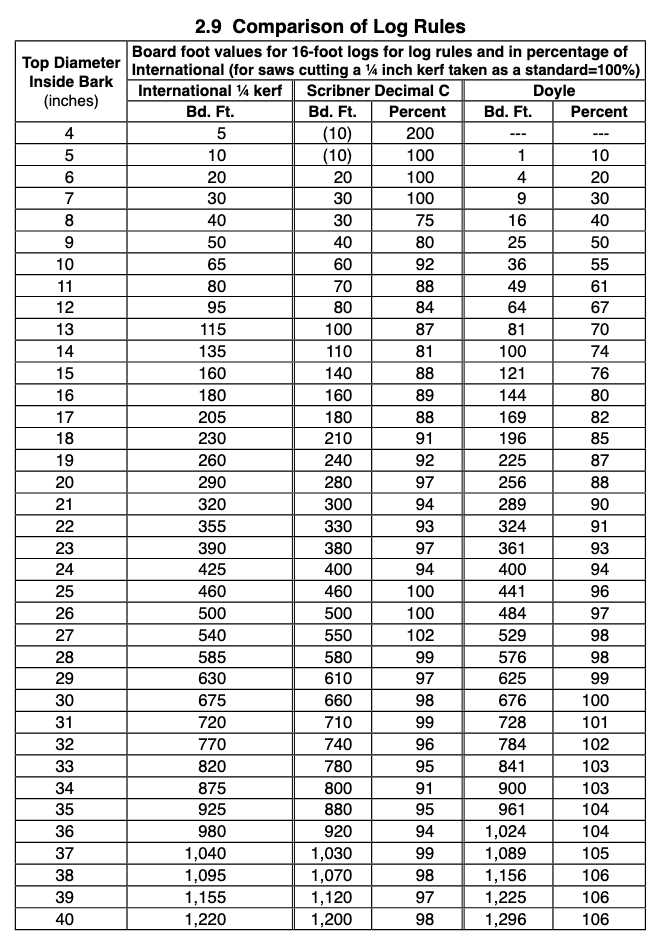
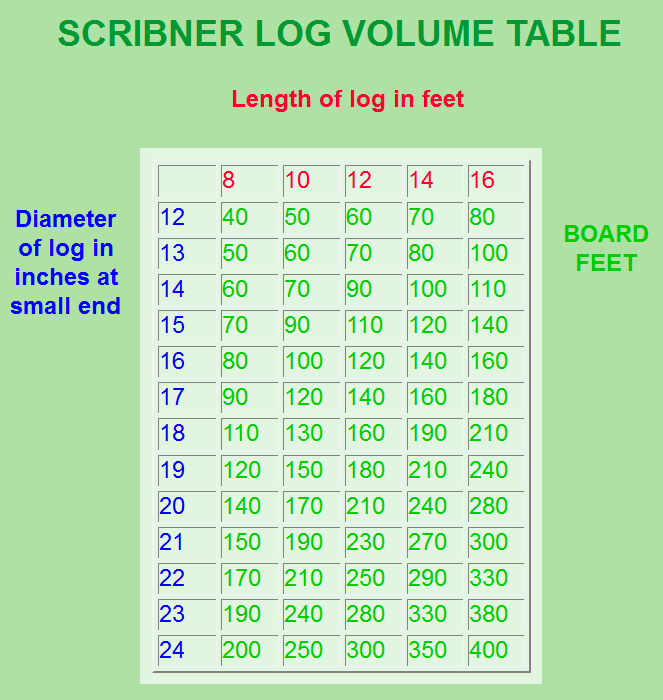
Log scale charts estimate the board feet based on log diameter and length. They provide quick reference values without complex math. Find charts that match your log type and measurement units. These charts make measuring easier and more accurate. They are a helpful guide for beginners and professionals alike.
Measuring Log Dimensions
Measuring log dimensions is the first step to calculate board feet accurately. You need to know the log’s size clearly. This helps estimate how much usable wood you can get from it. Careful measuring saves time and reduces errors in your calculations.
Measuring Diameter
Start by measuring the diameter of the log. Use a tape measure or caliper. Measure at the log’s widest point across the round face. Take the measurement in inches for better accuracy. Avoid measuring at the ends where the log may taper.
Measuring Length
Next, measure the log’s length. Use a tape measure along the straight edge. Record the length in feet or inches. Make sure the log is lying flat for a true measurement. Keep the tape straight and tight to avoid mistakes.
Dealing With Irregular Shapes
Logs are not always perfectly round or straight. For irregular shapes, take several diameter measurements at different points. Calculate an average diameter for better accuracy. If the log bends, measure the length along the curve. This helps estimate board feet more precisely.
Credit: sawmillfinder.com
Calculating Board Feet Manually
Calculating board feet manually helps you understand wood volume precisely. It involves using a simple formula and some basic measurements. This method works well without special tools or software. Anyone can learn it with practice and attention to detail.
Using The Formula
The formula to calculate board feet is straightforward. Multiply the length (in feet) by the width (in inches) and the thickness (in inches). Then divide the result by 12. This gives the volume in board feet.
Board Feet = (Length × Width × Thickness) ÷ 12
Length must be in feet, and width and thickness in inches. Keep the units right to get accurate results.
Step-by-step Calculation
First, measure the log length in feet. Then measure the width and thickness in inches. Multiply these three numbers. Divide the answer by 12 to convert to board feet. Write down each step to avoid mistakes. Double-check measurements for accuracy.
Examples With Different Log Sizes
Example 1: A 10-foot log, 6 inches wide, and 2 inches thick. Multiply 10 × 6 × 2 = 120. Divide 120 by 12 = 10 board feet.
Example 2: A 12-foot log, 8 inches wide, and 3 inches thick. Multiply 12 × 8 × 3 = 288. Divide 288 by 12 = 24 board feet.
Example 3: A 15-foot log, 10 inches wide, and 4 inches thick. Multiply 15 × 10 × 4 = 600. Divide 600 by 12 = 50 board feet.
Using Log Scale Methods
Using log scale methods helps measure the volume of logs accurately. These methods use special rules to estimate board feet. Each rule has its own way to calculate the wood volume. Understanding these methods is key for anyone working with logs and lumber.
Doyle Rule
The Doyle Rule is one of the oldest log scale methods. It uses a simple formula based on log diameter and length. This rule reduces the estimated volume for small logs. It works well for larger logs but may undercount smaller ones. Many sawmills still use the Doyle Rule today.
Scribner Rule
The Scribner Rule counts the number of boards a log can produce. It uses a diagram with circles to estimate the volume. This method considers the log’s diameter at the small end. It also factors in the log’s length. The Scribner Rule is more accurate than Doyle for medium-sized logs.
International 1/4-inch Rule
This rule is popular worldwide for its precision. It assumes a 1/4-inch saw kerf, or cut width, during milling. This rule calculates board feet by subtracting the saw kerf from the log volume. It works well for all log sizes. Many professionals prefer this method for detailed estimates.
Common Mistakes To Avoid
Calculating board feet in a log can be tricky. Many people make simple mistakes that lead to wrong results. Avoiding these errors saves time and money. Focus on accuracy and careful measuring for better calculations.
Incorrect Diameter Measurement
Measuring diameter is the first step in calculating board feet. Using the wrong tool or measuring at the wrong place causes errors. Always measure at the log’s smallest end. Use a tape measure or caliper for precision. Avoid guessing or rounding too early.
Ignoring Taper And Defects
Logs are not perfect cylinders. They often taper from one end to the other. Ignoring this taper can overestimate volume. Also, defects like knots or rot reduce usable wood. Check the log carefully and adjust measurements. This keeps calculations realistic and fair.
Misreading Scale Charts
Scale charts help convert measurements into board feet. Misreading these charts causes large mistakes. Take time to understand the chart layout. Match diameter and length correctly. Double-check numbers before finalizing your calculation.
Tips For Accurate Estimation
Estimating board feet in a log requires careful attention. Small mistakes can lead to big errors in the total volume. Accurate estimation saves money and avoids waste. Follow simple tips to get precise results every time.
Consistent Measurement Techniques
Use the same method for every log. Measure the diameter at the widest point. Record the length carefully. Avoid guessing or rough estimates. Consistency helps compare logs and calculate total board feet.
Regular Calibration Of Tools
Check your measuring tools often. Rulers and tapes can stretch or wear out. Use a known standard to test accuracy. Replace tools that give wrong readings. Accurate tools mean better measurements and fewer mistakes.
Consulting Professionals
Ask experts when uncertain about measurements. Foresters and sawmill workers know the best methods. They can teach shortcuts and correct errors. Their advice improves your estimation skills. Professional input helps handle unusual logs or tricky cases.

Credit: www.youtube.com
Frequently Asked Questions
What Is Board Feet In Lumber Measurement?
Board feet measure lumber volume. One board foot equals a 1-foot length, 1-foot width, and 1-inch thickness. It helps estimate wood quantity accurately.
How Do You Measure Board Feet In A Log?
Measure log diameter and length in feet. Use the Doyle or Scribner formula to calculate board feet. These formulas estimate usable lumber volume.
Why Is Calculating Board Feet Important For Logs?
Calculating board feet helps determine lumber value. It ensures accurate pricing and inventory management. It also aids in planning woodworking projects efficiently.
Can I Calculate Board Feet Without Special Tools?
Yes, use a tape measure and calculator. Measure log dimensions, then apply a board foot formula. This method gives a close estimate.
Conclusion
Calculating board feet in a log is simple with the right steps. Measure the log’s length and diameter carefully. Use the proper formula to find the board feet. This helps you know how much wood you have. It saves time and avoids mistakes.
Practice makes it easier over time. Keep your tools ready and measure twice. Accurate calculations help in planning and selling wood. Understanding this skill benefits anyone working with lumber. Try it yourself to see how clear it becomes.
As an Amazon Associate, I earn from qualifying purchases.
