
Have you ever wondered how to find the period of a wave and what it really means? Understanding this simple concept can unlock a clearer view of everything from sound waves to light waves and even ocean tides.
If you want to grasp how waves behave and how to measure their timing accurately, you’re in the right place. Keep reading, and you’ll learn an easy way to calculate the period of any wave—no complicated math or confusing formulas needed.
This knowledge will sharpen your skills whether you’re studying physics, working on a project, or just curious about the world around you.
Wave Period Basics
Understanding the basics of wave period helps explain how waves behave. The period is a key part of wave motion. It tells us how long one complete wave cycle takes to pass a point. This concept applies to many types of waves, such as sound, light, and water waves.
Knowing the wave period helps in science and engineering fields. It helps measure and predict wave patterns. Let’s explore the fundamental ideas behind wave period.
What Is Wave Period
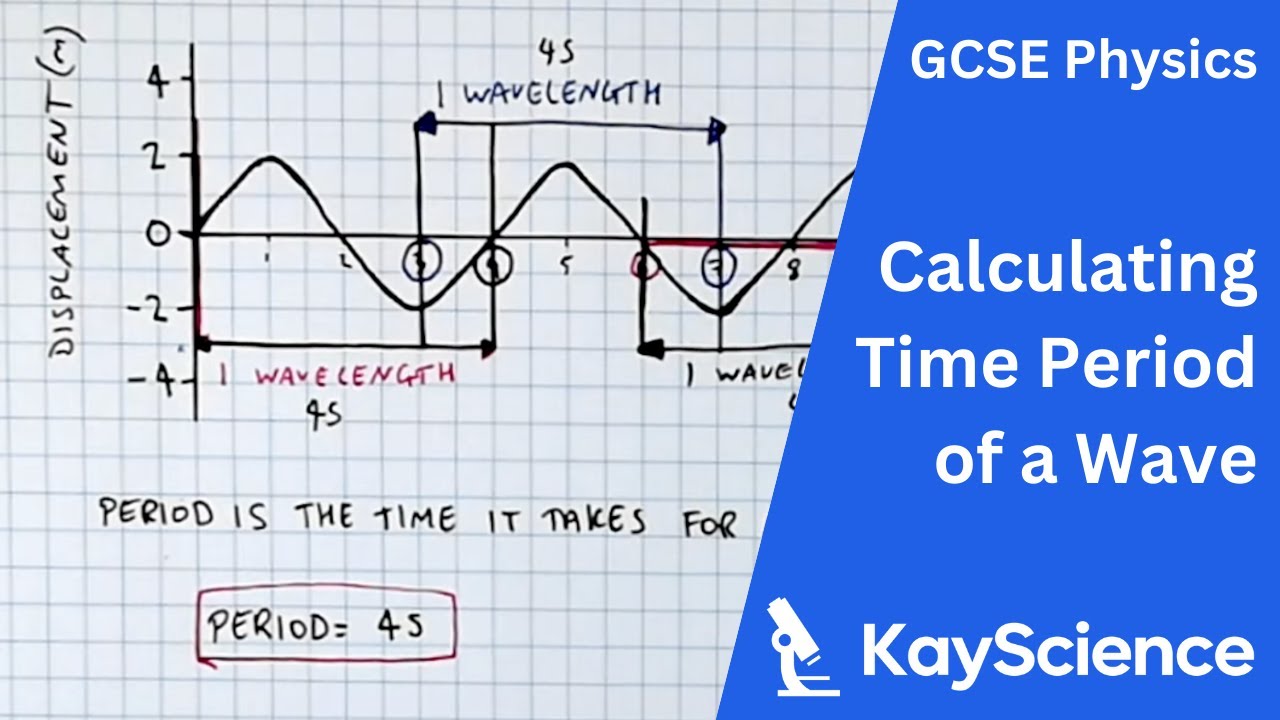
The wave period is the time for one full wave to pass a fixed point. It measures in seconds. Think of it as the time between two wave peaks or two troughs. A short period means waves come quickly. A long period means waves come slowly.
Relation Between Frequency And Period
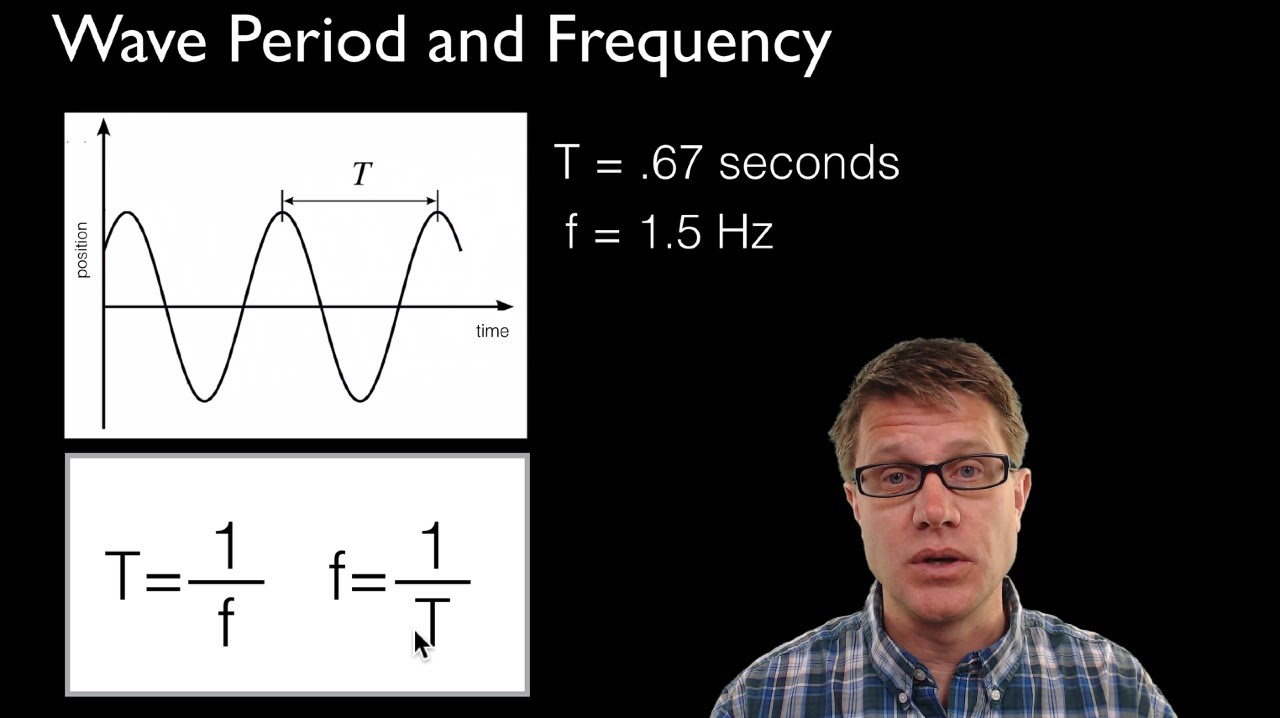
Frequency and period are closely connected. Frequency shows how many waves pass each second. Period is the time for one wave. They are inverses of each other. The formula is simple: period equals one divided by frequency. If frequency increases, period decreases. If frequency decreases, period increases.

Credit: study.com
Key Formulas To Use
Understanding the period of a wave is key to studying waves. The period tells us the time a wave takes to complete one cycle. You can find the period using different formulas. These formulas connect the period with frequency, speed, and wavelength of the wave. Knowing these will help you solve many wave problems easily.
Period From Frequency
Frequency shows how many wave cycles happen in one second. The period is the opposite of frequency. Use this formula to find the period:
For example, if a wave has a frequency of 5 Hz, its period is 1 divided by 5, which equals 0.2 seconds. This means each wave cycle takes 0.2 seconds to complete.
Using Wave Speed And Wavelength
Wave speed and wavelength also help calculate the period. Wave speed is how fast the wave moves. Wavelength is the distance between two wave peaks. Use this formula:
Period (T) = Wavelength (λ) / Wave Speed (v)
If a wave moves at 10 meters per second and its wavelength is 2 meters, the period is 2 divided by 10, which equals 0.2 seconds.
Step-by-step Calculation
Calculating the period of a wave is simple with a clear process. Follow these steps to find the period easily. This method helps in physics, engineering, and everyday science.
Identify Known Values
Start by finding the wave’s frequency or wavelength. Frequency is how many waves pass in one second. Wavelength is the distance between wave peaks. You need one of these to calculate the period.
Apply The Formula
The formula for the period (T) is the inverse of frequency (f). Write it as T = 1 / f. If you have the wavelength (λ) and wave speed (v), use T = λ / v. Choose the formula based on known values.
Solve For Period
Plug the numbers into the formula. Divide 1 by the frequency if you know it. Or divide the wavelength by the wave speed. The result is the time for one full wave cycle. This time is the period of the wave.
Common Mistakes To Avoid
Calculating the period of a wave seems simple but many make mistakes. These errors can lead to wrong answers and confusion. Avoiding common pitfalls helps you get the right result every time.
Confusing Period And Frequency
Period and frequency are related but different. The period is the time for one wave cycle. Frequency is how many waves pass in one second. Mixing them up causes errors in calculations. Remember, period is the reciprocal of frequency.
Unit Conversion Errors
Units matter a lot in wave calculations. The period is often in seconds, but sometimes data uses milliseconds or microseconds. Forgetting to convert units leads to wrong answers. Always check and convert units before calculating the period.
Real-life Examples
Understanding the period of a wave becomes clearer with real-life examples. Different types of waves show how to calculate the period in practical ways. These examples help connect the math with everyday experiences.
Sound Waves
Sound waves travel through the air as vibrations. The period of a sound wave is the time one vibration takes to pass. To find this, measure the time between two peaks in the sound wave. For example, a sound wave with a frequency of 500 Hz has a period of 1/500 seconds, or 0.002 seconds. This means the wave repeats every 0.002 seconds. Musicians use this to tune instruments and create clear sounds.
Water Waves
Water waves move across the surface of water in a repeating pattern. The period is the time it takes for one wave to pass a point. You can measure this by timing how long it takes for two crests to pass. If a wave passes every 4 seconds, its period is 4 seconds. Lifeguards watch wave periods to understand ocean conditions. This helps them keep swimmers safe by predicting wave patterns.
Credit: www.youtube.com
Credit: www.youtube.com
Frequently Asked Questions
What Is The Formula To Calculate The Period Of A Wave?
The period of a wave is calculated by the formula T = 1/f, where T is the period and f is the frequency. It represents the time taken for one complete wave cycle to pass a point.
How Does Frequency Affect The Wave Period?
Frequency and period are inversely related. Higher frequency means a shorter period, and lower frequency means a longer period. This means as waves oscillate faster, the time for one cycle decreases.
Can You Calculate Wave Period From Wavelength?
Yes, wave period can be found using wavelength and wave speed. The formula is T = λ / v, where λ is wavelength and v is wave speed. This gives the time for one complete wave cycle.
Why Is Knowing The Wave Period Important?
Knowing the wave period helps in understanding wave behavior and properties. It is crucial in physics, engineering, and communications to analyze wave patterns and predict wave motion accurately.
Conclusion
Calculating the period of a wave is simple once you know the formula. Just divide one by the frequency. This gives you the time for one full wave cycle. Understanding this helps in science and everyday life. Waves are everywhere—in sound, light, and water.
Knowing the period helps explain how waves behave. Practice using the formula with different examples. Soon, it will feel easy and clear. Keep exploring waves to see how they move and change. This basic skill is a key step in learning physics.
As an Amazon Associate, I earn from qualifying purchases.
