Choosing the right tint for your vehicle is more important than many drivers realize. A good tint does more than just improve how your car looks. It protects your skin from UV rays, keeps your car cooler, and adds privacy.
But with so many types, shades, and materials, making the best choice can be confusing. This guide will help you understand the key factors and avoid mistakes most car owners make when picking vehicle tints.
Understanding Different Tint Types
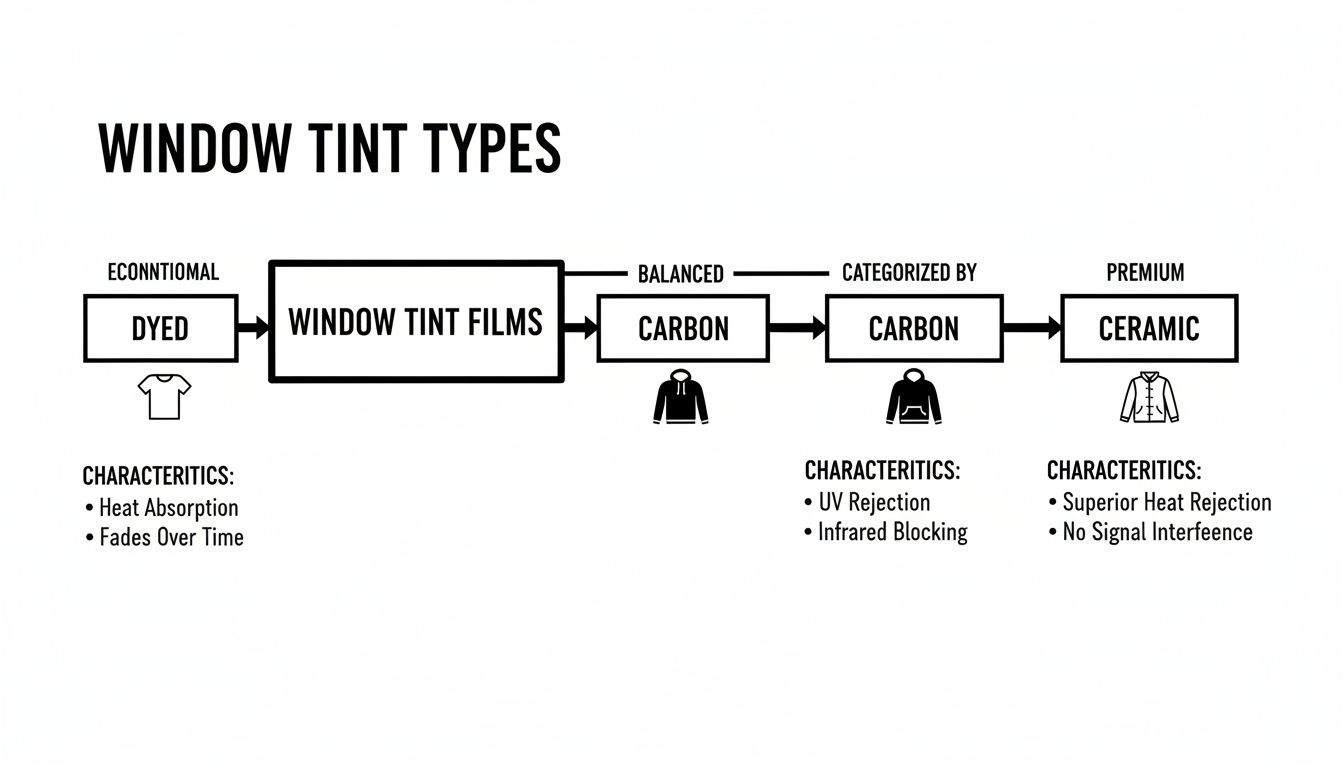
The market offers several main types of window tints. Each type has unique features, benefits, and price levels.
| Tint Type | Main Benefit | Average Lifespan |
|---|---|---|
| Dyed Film | Budget-friendly, reduces glare | 3-5 years |
| Metalized Film | Stronger, blocks heat, fade-resistant | 5-7 years |
| Carbon Film | No signal interference, excellent UV protection | 5-10 years |
| Ceramic Film | Best heat rejection, blocks UV, no fading | 10+ years |
- Dyed tint uses a layer of dye to absorb sunlight. It’s the cheapest and adds privacy, but it can fade over time.
- Metalized tint has metal particles that reflect sunlight. It’s more durable, but sometimes causes signal interference with GPS or phones.
- Carbon tint offers strong UV protection without interfering with electronic signals. It keeps your car cooler and does not fade.
- Ceramic tint is the top choice for heat and UV blocking. It’s the most expensive, but it lasts long and does not affect electronic devices.
Why Tint Darkness Matters
Many drivers think darker tints are always better, but that’s not true. Tint darkness is measured by Visible Light Transmission (VLT). A lower VLT means less light comes in, making the tint darker.
| VLT (%) | Appearance | Typical Use |
|---|---|---|
| 5% | Very dark (limo) | Maximum privacy |
| 20% | Dark | Side/rear windows |
| 35% | Medium | Front side windows |
| 50% | Light | Windshield (where legal) |
A common beginner mistake is choosing the darkest tint available. Too dark can reduce night driving visibility, and might be illegal in your region. Always check local laws before deciding.

Credit: www.atrstl.com
Knowing Local Tint Laws
Each country, and often each state or province, has its own window tint laws. These laws set the maximum darkness and reflection allowed for each window.
If your tint is too dark, you could face fines or even be asked to remove it. For example, in California, front side windows must allow more than 70% of light in. In Florida, the limit is 28%. Always research your area’s rules before you buy. The Wikipedia guide on window tint gives an overview, but check your local transport office for the latest details.
Heat And Uv Protection
The main reason many drivers tint their windows is to block heat and UV rays. UV rays can cause skin damage and fade your car’s interior over time. High-quality tints block up to 99% of UV rays.
Ceramic and carbon tints are best for heat and UV blocking. Dyed films block less, while metalized films offer decent protection but may affect signals. If you live in a hot climate or park outdoors, pay close attention to this factor.
Impact On Visibility And Safety
Good tints reduce glare and make driving more comfortable. However, if the tint is too dark, it can make night driving dangerous. For most drivers, a 35% VLT offers a good balance. It blocks glare but still allows enough light for safe driving.
Another overlooked point is windshield tinting. Most regions only allow a thin strip at the top (the “visor strip”). Never apply a dark film to the whole windshield—it’s unsafe and usually illegal.
Professional Vs. Diy Installation
Some car owners want to save money and install tints themselves. DIY kits are cheaper, but mistakes are common:
- Air bubbles
- Uneven edges
- Peeling or early fading
A professional installer knows how to cut and fit the film perfectly. They also usually offer a warranty. If you want your tint to last and look good, it’s worth paying for expert installation.

Credit: nextleveltint.com
Budget Considerations
Vehicle window tints range in price. Dyed tints are the least expensive, starting around $100 for a full car. Ceramic tints can cost $400 or more. Remember, the cheapest option often needs replacing sooner. Consider the long-term value, not just the upfront cost.
Comparing Tint Types By Key Factors
Here’s a quick comparison to help you decide:
| Factor | Dyed | Metalized | Carbon | Ceramic |
|---|---|---|---|---|
| Price | Low | Medium | Medium-High | High |
| Heat Blocking | Low | Medium | High | Very High |
| Signal Interference | No | Possible | No | No |
| Durability | Low | Medium | High | Very High |
Common Mistakes And How To Avoid Them
- Ignoring legal limits: Always check your local tint laws before buying.
- Choosing based only on looks: Darker is not always better. Consider safety, comfort, and legal issues.
- Forgetting about signal interference: Metalized tints can affect cell phone and GPS usage.
- Skipping professional installation: DIY jobs often lead to visible flaws.
- Not considering climate: High heat and sun exposure need stronger UV and heat-blocking films.
Many beginners don’t realize that the best tint for one car or climate may not work well for another. Talk to local experts if you’re unsure.
Practical Tips For Choosing Vehicle Tints
- Test tint samples on your windows to see how they look in real conditions.
- Ask for a written warranty from the installer.
- Consider how long you plan to keep your car. Better films save money over time.
- Think about resale value. Some buyers prefer lighter tints.
- Clean your windows well before installation for best results.
Credit: carmedicsautowerks.com
Frequently Asked Questions
What Is The Best Tint For Blocking Heat?
Ceramic tint blocks the most heat and UV rays. It keeps your car cooler, even in strong sunlight, and does not fade or interfere with devices.
Is It Legal To Tint My Front Windshield?
Most areas only allow a thin strip at the top of the windshield (the visor strip). Full windshield tinting is usually illegal and unsafe.
Will Window Tint Affect My Phone Or Gps Signal?
Metalized tints can block or weaken signals. Ceramic and carbon tints do not cause this problem.
How Long Does Vehicle Tint Last?
It depends on the type and quality. Dyed film lasts 3-5 years, while ceramic and carbon films can last 10 years or more with proper care.
Can I Remove Tint Myself?
Yes, but it can be difficult. Heating and peeling works for small sections. For full windows, it’s safer and easier to have a professional remove old tint.
Making the right choice for your vehicle tint is about more than style. It’s about comfort, protection, and following the law. With the right information and careful choices, you’ll enjoy the benefits for years.
As an Amazon Associate, I earn from qualifying purchases.