
Have you ever seen the term “RMS” when looking at speakers and wondered what it really means? Understanding RMS can change the way you choose and enjoy your sound system.
If you want your speakers to deliver clear, powerful audio without breaking or distorting, knowing about RMS is key. This article will break down exactly what RMS means in speakers and why it matters to you. Keep reading, and you’ll soon feel confident making smarter speaker choices that match your listening needs perfectly.
Rms Power Basics
Understanding RMS power is key to choosing the right speaker. RMS shows the continuous power a speaker can handle. This helps you know how loud and clear the sound will be without damage.
Many people confuse RMS power with other power ratings. Knowing the difference can help you make smart speaker choices. Let’s break down the basics of RMS power.
What Rms Stands For
RMS means Root Mean Square. It is a way to measure power. RMS shows the average power a speaker uses over time. This is different from short bursts of power. RMS gives a real idea of the speaker’s strength.
How Rms Differs From Peak Power
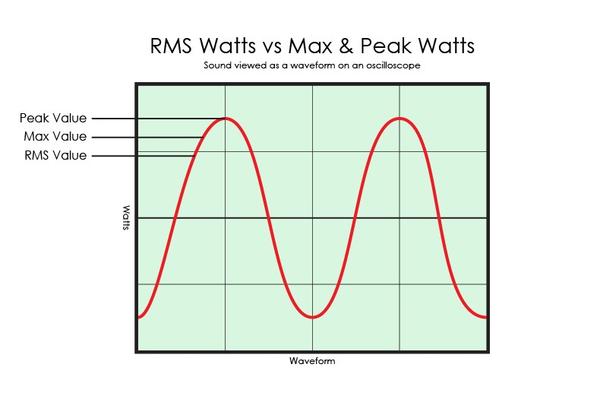
Peak power is the highest power level a speaker can handle briefly. This lasts only a few seconds. RMS power is the steady power it can handle for a long time. Peak power numbers are often higher. RMS is more reliable for real use.
Credit: techformusic.co.uk
Why Rms Matters In Speakers
Understanding RMS in speakers helps you choose the right sound system. RMS shows the power a speaker handles continuously. This power rating affects sound quality and speaker life. Knowing why RMS matters helps avoid damage and get clear sound.
Impact On Sound Quality
RMS power affects how clear and loud the speaker sounds. Speakers with proper RMS handle sound without distortion. Low RMS speakers may sound weak or crack at high volume. Correct RMS ensures balanced, smooth, and rich audio output.
Speaker Longevity And Safety
RMS helps protect speakers from damage. Playing sound above RMS power risks overheating and breaking parts. Proper RMS use keeps the speaker safe for longer time. It also prevents costly repairs or replacements.
Measuring Rms Power
Measuring RMS power is key to understanding speaker performance. RMS stands for Root Mean Square. It shows the continuous power a speaker can handle without damage. This measure helps compare speakers fairly. RMS power gives a real-world idea of how loud and clear a speaker can be over time.
Testing Methods
Testing RMS power involves playing a steady signal through the speaker. Technicians use a sine wave or pink noise at a set frequency. The speaker runs at this level for some time. They watch for distortion or damage signs. This method checks the speaker’s ability to handle power continuously.
Some tests use a load resistor to simulate speaker conditions. Measuring the voltage and current helps calculate power. The goal is to find the maximum power the speaker can take steadily.
Common Industry Standards
Industry standards set clear rules for RMS testing. AES (Audio Engineering Society) provides detailed testing procedures. These standards ensure consistent and fair power ratings.
IEC (International Electrotechnical Commission) also offers guidelines. These include test signals, duration, and limits on distortion. Following these standards helps buyers trust the speaker’s power rating.
Manufacturers who follow these rules give more reliable data. This helps users pick speakers that fit their needs better.
Rms Vs Other Power Ratings
Understanding speaker power ratings helps in choosing the right audio equipment. RMS is one common rating, but others exist. These ratings explain how much power a speaker can handle. Each rating shows a different aspect of speaker performance.
Peak Power Explained
Peak power is the highest energy level a speaker can handle briefly. It measures sudden bursts of sound. This rating shows the maximum power during short moments. It does not represent continuous use. Speakers with high peak power can play loud sounds without damage for a short time.
Program Power And Its Role
Program power is twice the RMS rating. It represents power during normal use with music or programs. This rating gives a better idea of real-world performance. Program power helps match amplifiers and speakers. It ensures good sound without distortion or damage.
Choosing Speakers Based On Rms
Choosing speakers based on RMS helps find the right fit for your audio setup. RMS, or Root Mean Square, shows the continuous power a speaker can handle safely. This value guides you to pick speakers that work well with your amplifier and match your listening needs.
Matching Rms To Amplifier Power
Match the speaker’s RMS rating to your amplifier’s power output. Choose speakers with RMS close to the amplifier’s continuous power. Avoid speakers with much lower RMS than the amplifier power. This prevents damage and poor sound quality.
Speakers with higher RMS handle more power without distortion. Amplifiers with lower power than the speaker’s RMS will work but may limit volume. Balance is key for good sound and long speaker life.
Considerations For Different Uses
Think about how you will use the speakers. For home use, moderate RMS speakers work well and save energy. For parties or outdoor use, higher RMS speakers deliver louder sound without damage.
Check the RMS rating before buying for specific needs. A low RMS speaker is fine for soft music and quiet rooms. Choose higher RMS speakers for strong bass and clear sound at high volume.
Credit: www.soundlabsgroup.com.au
Common Misconceptions About Rms
Many people misunderstand what RMS means in speakers. This causes confusion about speaker power and sound quality. RMS is often mixed up with other terms like peak power or volume. Knowing the truth helps you choose the right speaker for your needs.
Rms And Volume Levels
RMS measures continuous power, not how loud a speaker can get. Loudness depends on speaker efficiency and design. A speaker with high RMS does not always play louder than one with lower RMS. Volume is about how much air the speaker moves, not just power.
Some think high RMS means the speaker will be very loud all the time. This is wrong. RMS shows safe power handling over time, not maximum volume.
Misleading Marketing Claims
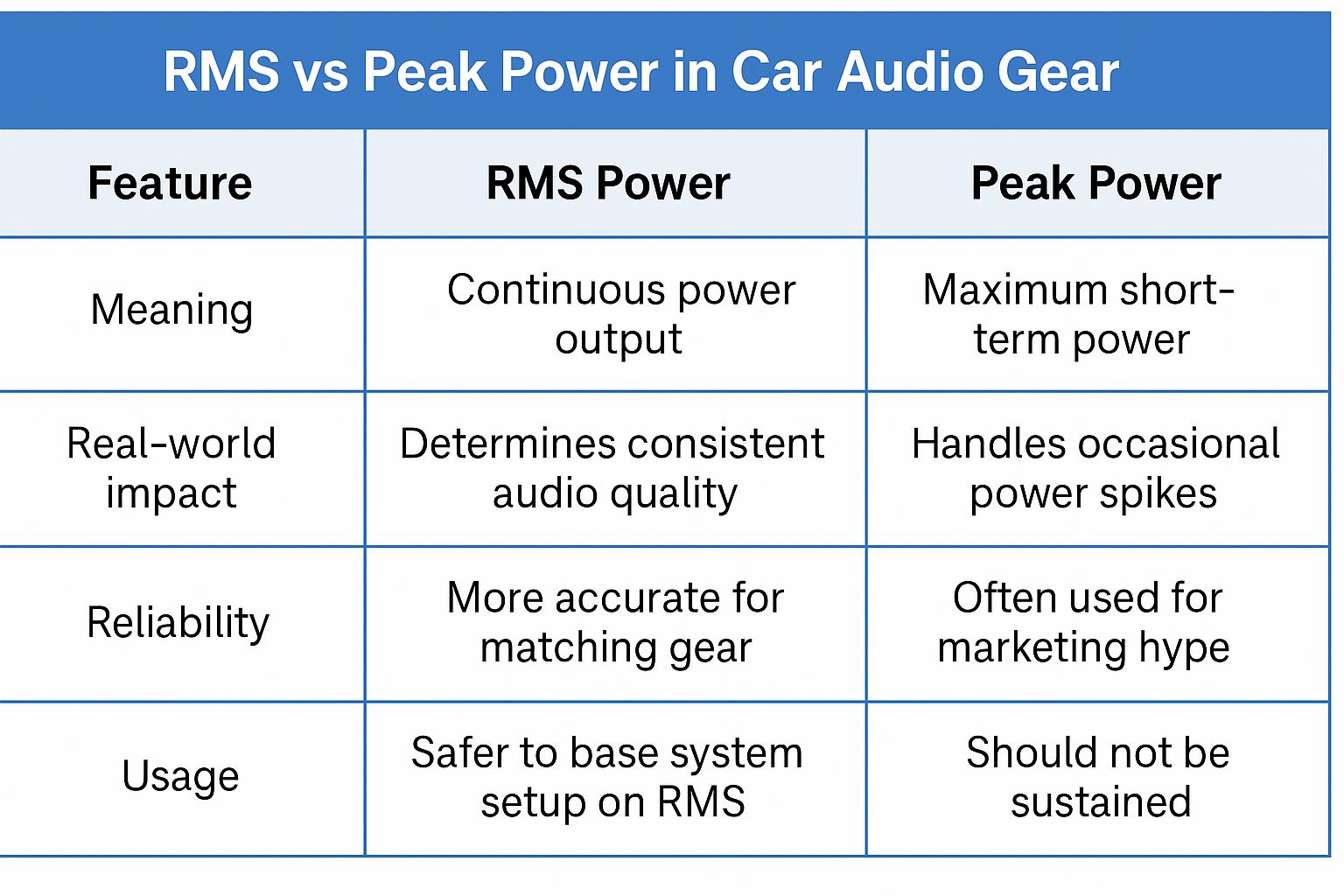
Many brands use RMS numbers to make speakers look better. They sometimes mix peak power with RMS to confuse buyers. Peak power is short bursts, not long playtime power. This misleads customers about speaker strength.
Check if the RMS number is real or just marketing hype. True RMS ratings come from standard tests. Be careful of very high RMS claims without proof.
Credit: eliteautogear.com
Frequently Asked Questions
What Does Rms Mean In Speaker Power?
RMS stands for Root Mean Square. It measures continuous power a speaker can handle without damage. RMS gives a realistic power rating, unlike peak power, which shows maximum short bursts.
Why Is Rms Important For Speakers?
RMS helps determine a speaker’s true power capacity. It ensures you match speakers with amplifiers properly. Using RMS prevents distortion and damage, improving sound quality and speaker longevity.
How Is Rms Different From Peak Power?
RMS measures continuous power output, while peak power shows short bursts. Peak power is often higher but less reliable. RMS provides a better estimate of real-world speaker performance.
Can Rms Affect Speaker Sound Quality?
Yes, RMS affects sound clarity and consistency. Proper RMS matching avoids distortion and overheating. It ensures speakers perform optimally at safe power levels.
Conclusion
RMS in speakers shows the real power they handle safely. It helps you choose speakers that work well with your devices. Knowing RMS avoids damage and keeps sound clear. Always check RMS before buying speakers for better results. Understanding this term makes your audio experience smoother and more enjoyable.
Simple, right? Now, you can pick speakers with confidence and enjoy great sound every time.
As an Amazon Associate, I earn from qualifying purchases.

