
Have you ever wondered when the smartphone, that powerful device in your hand, was actually invented? It’s more than just a phone—it’s your camera, your map, your personal assistant, and so much more.
Knowing the story behind its creation can change the way you see your daily tech. Keep reading, and you’ll discover surprising facts about the very first smartphone and how it transformed the way you connect with the world. This is a story you don’t want to miss.
Early Mobile Communication Devices
Early mobile communication devices laid the foundation for today’s smartphones. These devices allowed people to talk without wires. They marked a big step in technology and changed how people connect.
Before smartphones, many inventions helped develop mobile communication. Each one brought new ideas and features that made talking on the move easier.
Origins Of Mobile Telephony
The first ideas of mobile telephony date back to the early 20th century. Engineers wanted to send voice signals without cables. In the 1940s, radio systems were used in cars. These systems let drivers call others within a limited area.
In 1946, the first official mobile telephone service started in the USA. It was bulky and had few users. But it showed the potential of mobile voice communication. This technology kept improving over the next decades.
First Portable Phones
The first truly portable phones came in the 1970s. These devices were large but could be carried by hand. Motorola created one of the first models called the DynaTAC. It weighed almost 2.5 pounds and had a short battery life.
These phones were expensive and rare. Only business people and emergency workers used them. Yet, they proved that mobile phones could become personal devices. This was a key moment before the smartphone era.
The Birth Of The Smartphone
The smartphone changed how people communicate and use technology. It combined a phone with a small computer. This new device made it easier to send messages, check emails, and access the internet on the go.
The birth of the smartphone dates back to the early 1990s. It was a time when mobile phones were just for calls and texts. The idea of adding more features to a phone was just beginning to take shape.
Ibm Simon: The Pioneer
IBM Simon is considered the first real smartphone. It was introduced in 1994. This device could make calls and send faxes. It also had a touch screen, which was rare at the time.
Simon combined a phone with features like a calendar and address book. It was a bold step forward in mobile technology. Although it was bulky and had a short battery life, it showed what smartphones could become.
Key Features Of Early Smartphones
Early smartphones had simple but useful features. They included touch screens and basic apps. Users could send emails and faxes directly from the device.
These phones also had stylus input for easier navigation. They supported simple games and note-taking. Early smartphones paved the way for the advanced devices we use today.
Evolution Through The 1990s And 2000s
The 1990s and 2000s marked a key period in smartphone history. Devices shifted from simple phones to powerful tools for communication and work. Innovations in design and technology shaped how people connect and use mobile devices. These decades set the stage for the smartphones we use today.
Advancements In Hardware
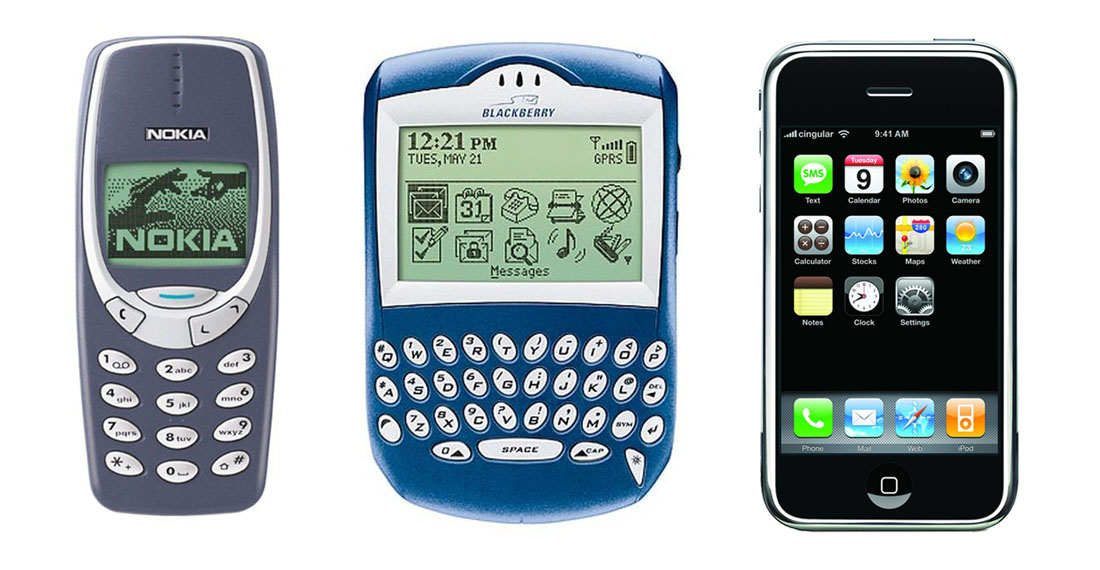
Phones grew smaller and lighter during this time. Screens improved from tiny monochrome to larger color displays. Cameras became common, letting users take photos on the go. Keypads evolved, with some phones adding QWERTY keyboards. Battery life improved, allowing longer use between charges. Processors became faster, enabling better performance for apps.
Rise Of Mobile Operating Systems
Early phones had basic software with limited functions. New mobile operating systems appeared, offering more features. Palm OS and Windows Mobile were among the first popular platforms. Nokia’s Symbian OS dominated many markets. Apple introduced iOS in 2007, changing user experience. Google’s Android followed, becoming widely used worldwide. These systems allowed third-party apps, expanding phone capabilities greatly.

Credit: www.textline.com
The Impact Of Apple’s Iphone
Apple’s iPhone changed the way people use phones. It brought new ideas and made smartphones popular worldwide. The iPhone set a new path for phone design and function. It changed how users interact with their devices and how developers create apps. This impact is still felt today in many ways.
Revolutionizing User Interface
The iPhone introduced a touch screen that responds to fingers. This was different from the buttons and styluses used before. Users could swipe, tap, and pinch to control the phone. The interface became simple and easy to use. This style influenced many other phones and devices after.
App Store And Ecosystem Growth
Apple created the App Store to sell and share apps. This gave developers a place to offer their ideas. Users found many useful and fun apps in one spot. The App Store helped build a strong community around the iPhone. It made the phone more useful and personal for everyone.
Android’s Role In Smartphone Popularity
Android played a key role in making smartphones popular worldwide. It gave phone makers a free and flexible system. This helped many companies create different phones for all budgets. More people could afford smartphones with Android inside. The system kept improving with new features and apps. This made smartphones useful for daily tasks and fun activities. Android’s impact on the market is huge and still grows.
Open Source Advantage
Android is open source, meaning anyone can use and change it. Phone makers do not pay fees to use Android. This lowers the cost of making smartphones. Developers can build many apps easily for Android phones. Users get a wide variety of apps to choose from. The open source nature encourages innovation and improvement. It helps Android grow fast and reach many users.
Global Market Expansion
Android helped smartphones reach many countries and people. It works on many devices, from cheap to expensive. This variety fits different needs and budgets worldwide. Android supports many languages and local services. It allows phone makers to sell phones everywhere. More people joined the smartphone world thanks to Android. Its global reach made it a top choice for users and makers.
Technological Milestones In Smartphones
Smartphones have changed a lot since their first invention. Many key technologies helped shape modern phones. These milestones made phones smarter, easier to use, and more useful. Understanding these steps shows how fast technology moved.
Touchscreen Innovations
Early phones used physical buttons. Touchscreens made phones simple and quick to control. The first touchscreens were slow and not very accurate. Later, capacitive screens improved sensitivity and multi-touch ability. This allowed users to pinch, swipe, and tap easily. Touchscreen technology made phones more interactive and flexible.
Camera And Connectivity Enhancements
Adding cameras to phones changed how people share moments. Early phone cameras had low quality and slow speeds. Over time, camera resolution and features improved greatly. Phones also gained better internet connections like 3G, 4G, and now 5G. Faster networks let users browse, stream, and talk without delay. These advancements made smartphones essential tools for daily life.
Smartphones Today And Beyond
Smartphones today are part of daily life for billions of people. They do much more than just calls or texts. These devices help with work, learning, entertainment, and staying connected. Technology in smartphones keeps changing fast. Each year, new features and designs emerge.
The future of smartphones promises exciting changes. Developers aim to make phones smarter and easier to use. Many ideas now are still in testing or early stages. These could shape how we use phones in the next decade.
Current Trends And Features
Modern smartphones have large, bright screens that show clear images. Cameras are very advanced, allowing high-quality photos and videos. Many phones support fast charging and long battery life. Voice assistants help users do tasks quickly. Features like fingerprint sensors and face recognition improve security. Phones now often include 5G for faster internet speeds. Apps cover every need, from health to education. Foldable phones offer new ways to use screens and apps.
Future Prospects And Innovations
Future phones may have flexible, rollable screens for better portability. Artificial intelligence will make phones smarter at predicting needs. Battery technology could improve, making charging much faster. Augmented reality may blend digital content with the real world. Phones might use new materials to be stronger and lighter. Some ideas include built-in projectors and advanced health sensors. Privacy and security will remain key focuses for developers. The line between phones and other smart devices will blur.

Credit: www.weforum.org
Credit: www.productevolution.org
Frequently Asked Questions
When Was The First Smartphone Invented?
The first smartphone was invented in 1992 by IBM. It was called Simon Personal Communicator and released in 1994. This device combined a phone and PDA features, making it the earliest true smartphone.
Who Invented The Smartphone?
IBM invented the first smartphone. The IBM Simon Personal Communicator was created by a team led by Frank J. Canova. It introduced touchscreen, email, and fax capabilities, shaping future smartphone development.
How Did Smartphones Evolve Since Invention?
Smartphones evolved with better processors, cameras, and apps. Apple’s iPhone in 2007 revolutionized user experience with a touchscreen interface. Android followed, expanding smartphone accessibility worldwide.
What Features Did The First Smartphone Have?
The first smartphone had a touchscreen, email, fax, and PDA functions. It included a calendar, address book, and note pad. These features laid the foundation for modern smartphones.
Conclusion
The smartphone started as a simple idea in the early 1990s. It grew fast into a device people use every day. Today, smartphones help us talk, work, and play. They keep changing to fit our needs. Understanding their origin helps us value their role in life.
The journey of the smartphone shows how technology shapes our world. It’s clear that this invention has changed how we live. The story of the smartphone is still unfolding. What will come next? We can only wait and see.
As an Amazon Associate, I earn from qualifying purchases.