
Many Ford F150 owners wonder about the right way to add transmission fluid. This task may sound simple, but doing it incorrectly can cause big problems for your truck. Mistakes can lead to poor shifting, transmission damage, or even a complete breakdown.
Knowing exactly where and how to add transmission fluid is important for keeping your F150 running smoothly. This guide covers the full process, explains what you need to check, and helps you avoid common errors that many beginners make.
Understanding Your Ford F150 Transmission
The Ford F150 comes with several different transmission types, depending on the model year and engine. Most common are the automatic transmission and, in older models, a manual transmission. The steps for checking and adding fluid are a bit different for each.
- For most modern F150s (2011 and newer), you’ll likely have a sealed automatic transmission with no dipstick.
- Older F150s (2010 and earlier) usually have a dipstick for checking and adding fluid.
Knowing your truck’s model year and transmission type is the first step before you start.
Why Transmission Fluid Matters
Transmission fluid does more than just lubricate. It cools the transmission, cleans components, and allows gears to shift smoothly. Low or dirty fluid can cause:
- Slipping gears
- Rough shifting
- Burning smell
- Transmission overheating
Ignoring these signs can lead to expensive repairs. So, checking and adding the right fluid is essential.
Credit: www.carcarekiosk.com
Where To Add Transmission Fluid On A Ford F150
The exact place to add transmission fluid depends on the model year and transmission type. Here’s how to find the right spot on the most common F150 models.
F150s With A Dipstick (older Models)
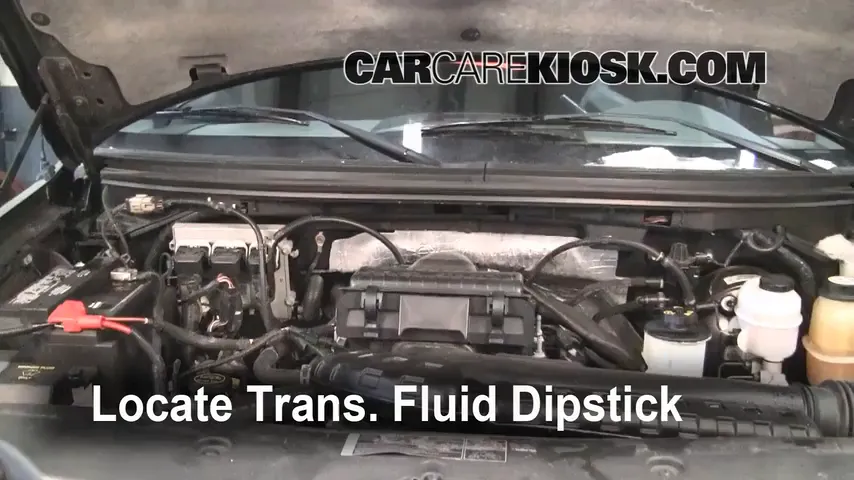
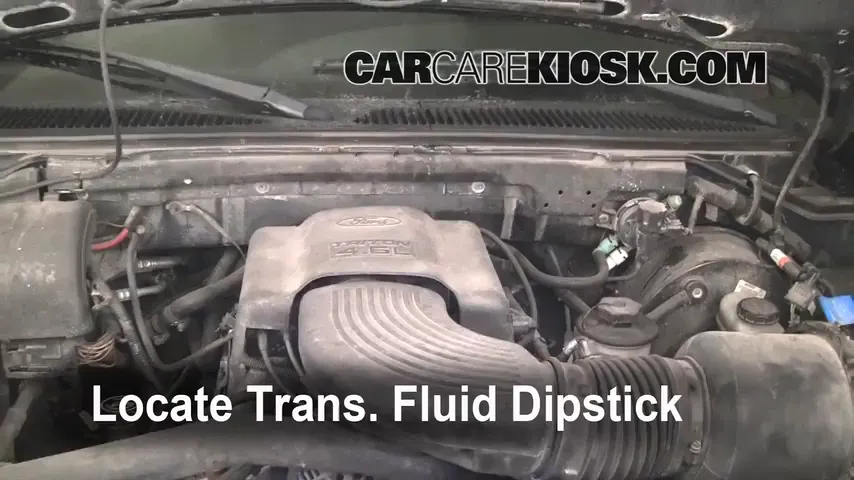
- Open the hood and locate the transmission dipstick. It’s usually at the back of the engine, near the firewall. The dipstick handle is often yellow or red.
- Pull out the dipstick, wipe it clean, reinsert it fully, then pull it out again to check the level.
- If the fluid is low, use a long funnel to add fluid into the same dipstick tube.
F150s Without A Dipstick (newer Models)
Many newer F150s have a sealed transmission. This design helps prevent fluid contamination, but makes adding fluid more complex.
- Raise the truck safely using ramps or a lift.
- Locate the transmission fill plug. It’s usually on the side of the transmission body, underneath the truck.
- With the engine running and the truck level, remove the fill plug. If fluid drips out, the level is correct. If not, add fluid using a pump until it starts to flow out.
Tip: Always use the exact transmission fluid type listed in your owner’s manual. Using the wrong fluid can damage your transmission.
Step-by-step: Adding Transmission Fluid
Adding fluid to your Ford F150 requires careful steps. Here’s a simple guide for each type.
For F150s With A Dipstick
- Park on a Level Surface: Make sure the truck is in park, engine running, and parking brake engaged.
- Check Fluid Level: Pull the dipstick, wipe clean, reinsert, and check again.
- Add Fluid Slowly: Use a funnel. Pour in a little at a time (about half a quart), then recheck.
- Repeat Until Full: Fluid should reach the “Full” mark on the dipstick.
- Run Through Gears: With your foot on the brake, shift through all gears, then recheck level.
For F150s Without A Dipstick
- Raise the Vehicle: Use ramps or a lift for safe access underneath.
- Locate Fill Plug: Usually on the side of the transmission.
- Remove Plug with Engine Running: Truck must be level.
- Pump Fluid In: Add until it starts to drip out.
- Reinstall Plug: Tighten securely to avoid leaks.
Comparison: Dipstick Vs Sealed Transmission
Here’s how the two types compare:
| Feature | Dipstick Transmission | Sealed Transmission |
|---|---|---|
| Ease of Checking | Simple (under hood) | Requires going under vehicle |
| Tools Needed | Funnel | Pump, ramps/lift, wrench |
| DIY Friendly | Yes | More difficult |
| Common in Years | Pre-2011 | 2011 and newer |
How Much Transmission Fluid Does An F150 Need?
The amount of fluid depends on the transmission type and whether you’re just topping off or doing a full flush.
| Model Year | Transmission Type | Fluid Capacity (Approx.) |
|---|---|---|
| 2004-2010 | 4-speed Automatic | 13.9 quarts (full change) |
| 2011-2020 | 6/10-speed Automatic | 12-13 quarts (full change) |
| Fluid Top-Off | All | 0.5-2 quarts (varies) |
Always check your owner’s manual for the exact numbers. Overfilling is just as harmful as running low.
Credit: www.carcarekiosk.com
Common Mistakes To Avoid
Many F150 owners make these errors:
- Using the wrong fluid type: Always match what’s in the manual.
- Adding too much fluid: Overfilling can cause high pressure and leaks.
- Not running the engine: Fluid levels read differently when the engine is off.
- Ignoring leaks: Even small leaks can quickly drain fluid.
A non-obvious tip: If you see pink, milky fluid, water may have entered your transmission. This can ruin the transmission fast—get professional help right away.
Signs Your Transmission Fluid Needs Attention
Watch for these clues:
- Transmission slipping
- Delayed or harsh shifts
- Unusual noises
- Burning smell
- Puddles under truck
If you notice any of these, check the fluid level and condition immediately.
When To Seek Professional Help
Not all transmission fluid problems can be fixed at home. If you see metal shavings on the dipstick, or your truck refuses to shift, it’s time for a qualified mechanic. Also, sealed transmissions are best serviced by professionals, especially for a full fluid change.
Practical Tips For A Smooth Job
- Warm up the engine before checking fluid.
- Wear gloves—fluid can be hot and messy.
- Dispose of old fluid at a recycling center, not in the trash.
- Use a flashlight to see under the truck if needed.
A trick many miss: when adding fluid to a sealed system, always double-check that the truck is perfectly level. Even a small tilt can give a false reading.

Credit: www.youtube.com
Frequently Asked Questions
How Do I Know If My Ford F150 Has A Sealed Transmission?
Most F150s from 2011 onward have sealed transmissions with no dipstick. Check your owner’s manual or look for a dipstick under the hood. If you can’t find one, it’s likely sealed.
What Type Of Transmission Fluid Should I Use?
Always use the fluid type recommended in your owner’s manual. For many Ford F150s, this is Mercon LV. Using the wrong fluid can cause transmission damage.
How Often Should I Check Or Change Transmission Fluid In A Ford F150?
Check fluid levels at least twice a year or during every oil change. For fluid changes, Ford often suggests every 30,000-60,000 miles, but check your manual for exact intervals.
Can I Add Transmission Fluid Myself Or Should I Go To A Mechanic?
If your F150 has a dipstick, you can easily add fluid at home. For sealed transmissions or full fluid changes, it’s safer to visit a professional.
What Happens If I Overfill The Transmission?
Too much fluid can cause foaming, poor shifting, or leaks. Drain excess fluid immediately if you overfill.
Taking care of your Ford F150’s transmission fluid doesn’t have to be a mystery. With the right steps, tools, and knowledge, you’ll keep your truck shifting smoothly for years. For more technical details, visit the official Ford Owner Site. Regular checks and careful maintenance can save you from costly repairs and help your F150 last longer.
As an Amazon Associate, I earn from qualifying purchases.